
‘CSS’ Videos
-

Michael Arestad: Godzilla CSS
WordCamp US 2015Speaker: Michael ArestadDecember 13, 2015 — CSS in itself can be pretty difficult even when it’s just one person writing it on a project that is small in scope, but what happens when things get bigger? What naming conventions scale well? How do you work on it with a large team? What are the considerations needed for an open source project or really any project? What tools should be used? I’m going to be answering these and discussing a few other issues that may spring up when working on complex projects. I’m also going to talk about things that might drive you crazy, but don’t actually make an impact on your project.
-

Beth Soderberg: Dynamic CSS – Transforms, Transitions, and Animation Basics
WordCamp US 2015Speaker: Beth SoderbergDecember 10, 2015 — You’ve got the basics of CSS down, but you are ready to kick it up a notch and add a bit more pizazz and interactivity to your websites. In this session we’ll explore the fundamentals of CSS transforms, transitions, and animation. What are the basic building blocks that make up these capabilities? What is the difference between a transition and a transform? What does browser support look like? Most importantly, how can you put these tools to use in your next project and where can you find good resources to learn more? We’ll answer these questions and more as we explore the basics of how to add some of the more truly dynamic elements of CSS to our websites.
-

Daniel Martinez: Administración del CSS en la construcción de Temas
WordCamp Cantabria 2015Speaker: Daniel MartinezDecember 9, 2015 — Administración del CSS en la construcción de Temas – Daniel Martinez
-
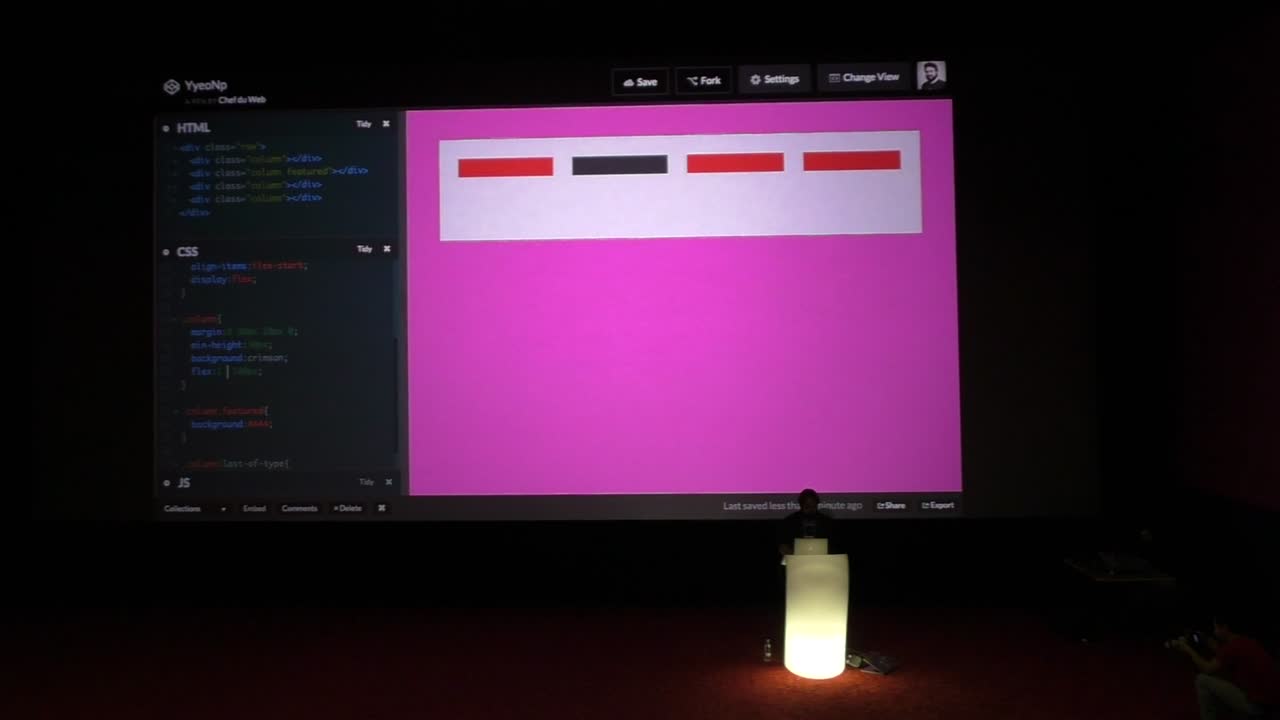
Luc Princen: Thinking Outside The Box (Model): WordPress Theming With Flexbox
WordCamp Sofia 2015Speaker: Luc PrincenDecember 7, 2015 — In this talk we’ll drop most of the regular box-model in CSS and start exploring flexbox. A new (and native) way to align, order and position elements in css. We’ll be live-coding a theme-page and getting a glimpse into the concrete advantages of using flex over the current techniques.
-

Josh Collinsworth: Be Classless – Optimizing Your CSS for WordPress
WordCamp Omaha 2015Speaker: Josh CollinsworthNovember 17, 2015 — It’s easy to get caught up adding HTML classes (and IDs) to each and every element we want to style, but the fact is, WordPress helps us out with specific targeting by adding its own classes and IDs to certain elements on every page and post. Cleverly utilizing WordPress’s default page build along with CSS’s pseudo classes and combinators makes it possible to be highly specific with our targeted styles while leaving the original HTML completely alone. In short, if we look for ways, we can often avoid adding more classes and wrapping text in spans to have WordPress and CSS do the work for us.
-

Maura Teal: Getting Started With Sass
WordCamp Philly 2015Speaker: Maura TealNovember 17, 2015 — An introduction to Sass for beginning developers or power users who already have a basic understanding of CSS. This talk will go over getting started with Sass in WordPress theme development, including: Sass vs CSS, setup options (theme file structure or use of a CSS plugin), understanding variables, nesting, mixins, extends, and libraries like Compass and Susy.
Additionally, this talk can cover use cases for integrating the Sass version of frameworks like Bootstrap or Foundation without having to clutter your theme’s markup. With that you get the best of both worlds (bespoke and human-readable classes and the springboard for development and design that frameworks provide).
-

Pete Schuster: CSS Architecture and Style Guides
WordCamp Philly 2015Speaker: Pete SchusterNovember 5, 2015 — This session will cover CSS style guides and architecture. It will introduce and explain the benefits of OOCSS, BEM, and style guide driven development.
-

Stephanie Hobson: Debugging CSS
WordCamp Vancouver 2015Speaker: Stephanie HobsonOctober 2, 2015 — CSS is awesome. Except when it’s not. From diagnostic styles to dev tools, we’ll cover a variety of techniques to help you determine if that unexpected behaviour is the result of a misplaced semicolon or if it’s time to file a bug report.
-

Kathryn Presner: A CSS Adventure
WordCamp Montréal 2015Speaker: Kathryn PresnerSeptember 21, 2015 — Ever wanted to make small changes to the look-and-feel of your site but weren’t sure how to go about it? Itching to change the colour of your site title, tweak the size of your paragraph text, or hide the date on your posts? Let’s go on a CSS adventure together! In this session you’ll learn some basic CSS (Cascading Style Sheets) and we’ll look at some practical examples, using a browser inspector to customize our site’s design.
Prerequisites:
Some basic HTML knowledge is helpful, but not required. You should be open to looking “under the hood” at a site’s HTML and CSS. -
Дмитрий Майоров: Элементы типографики для новичков
WordCamp Russia 2015Speaker: Dmitry MayorovAugust 20, 2015 — Дмитрий расскажет о простых правилах типографики, которые лежат в основе хорошего сайта. Правилах, которые мало зависят от тенденций и трендов и будут также актуальны через много лет.

An  Ruckus
