
‘WordPress.org’ Videos
-
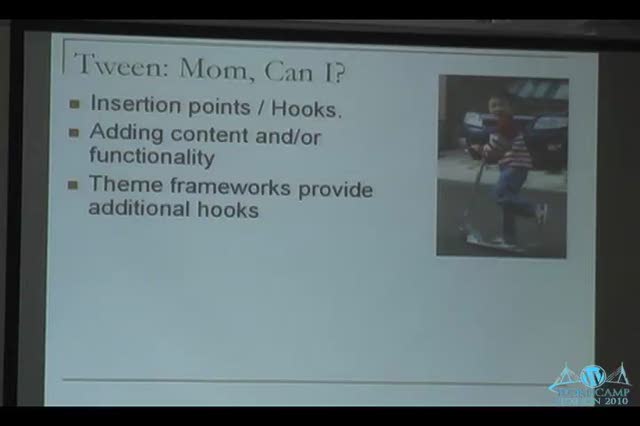
Daisy Olsen: Parent and Child Themes
WordCamp Boston 2010Speaker: Daisy OlsenJanuary 23, 2010 — The Parent/Child theme structure allows website owners, designers, and developers the ability to create custom theme designs quickly. Daisy Olsen discusses various aspects of this useful theme creation technique.
Special thanks to the Microsoft NERD Center for hosting WordCamp Boston.
-
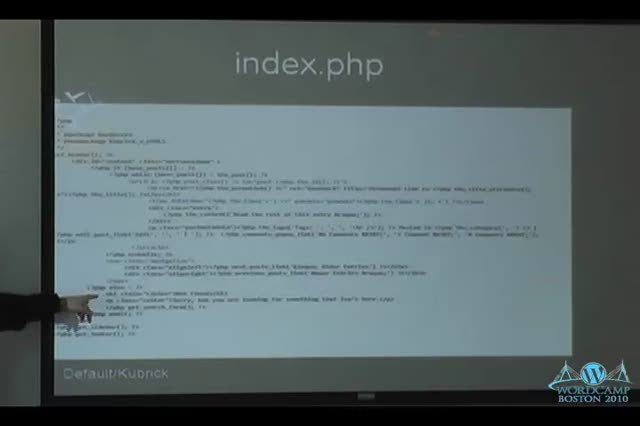
Rob Larsen: HTML 5
WordCamp Boston 2010Speaker: Rob LarsenJanuary 23, 2010 — Rob Larsen shows you how to create cross-browser, HTML5 enhanced WordPress themes using nothing more than a little extra JavaScript, basic WordPress knowledge and some knowledge of the new elements.
Special thanks to the Microsoft NERD Center for hosting WordCamp Boston.
-
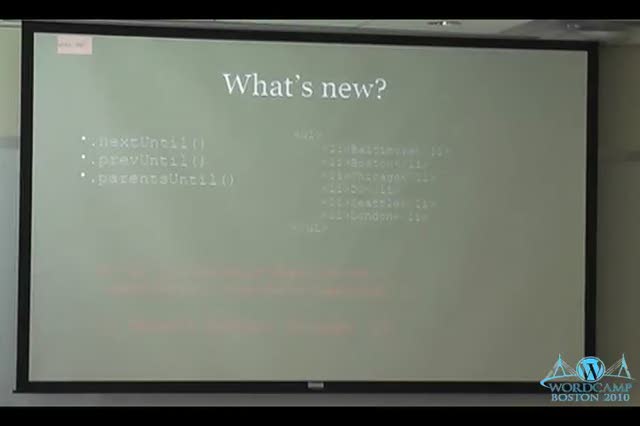
Jim Doran: jQuery in WordPress
WordCamp Boston 2010Speaker: Jim DoranJanuary 23, 2010 — jQuery is a lightweight JavaScript framework that’s extremely popular with Web designers and developers. Jim Doran presents an overview of jQuery and how to start using it, including a case study that uses jQuery with a new, homemade WP theme and layout techniques, animation effects, DOM manipulation and AJAX/JSON.
Special thanks to the Microsoft NERD Center for hosting WordCamp Boston.
-
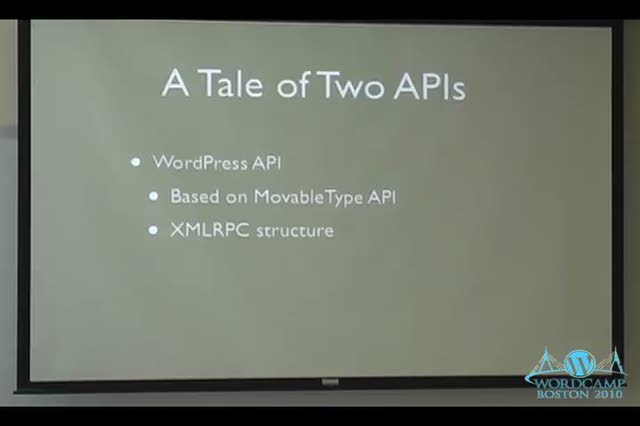
Daniel Jalkut: Exercising APIs
WordCamp Boston 2010Speaker: Daniel JalkutJanuary 23, 2010 — Daniel Jalkut presents a high-level overview of the two major APIs that WordPress supports for remote integration: XML-RPC and AtomPub. He discusses a variety uses for these APIs ranging from desktop apps to cross-site integration to specialized iPhone clients. This talk is aimed at designers and plugin developers who might get use out of the API, or whose knowledge of it might help them make better implementation choices.
Special thanks to the Microsoft NERD Center for hosting WordCamp Boston.
-
Michael Yoshitaka Erlewine: Getting into The Loop
WordCamp Boston 2010Speaker: Michael Yoshitaka ErlewineJanuary 23, 2010 — The magic behind WordPress is how it processes queries and gives you the results via “The Loop.” The Loop can be hijacked for a variety of custom uses and these techniques can quickly expand the capacity of WordPress to present information in different ways. Mitcho covers The Loop, as well as PHP tips which help introspect WordPress during lower-level development.
Slides for this presentation are available here.
Special thanks to the Microsoft NERD Center for hosting WordCamp Boston.
-

Introducing WordPress 2.9 – “Carmen”
Speaker: Michael PickDecember 21, 2009 — A new global “Trash” feature, built-in image editing, better plugin updating and compatibility checking, and easier embed support make up the latest release of WordPress.org, revealed for you in this introduction.
-

Intégrer un module Facebook Connect sur votre blog WordPress
Speaker: Aurélien DenisDecember 14, 2009 — Les réseaux sociaux comme Facebook ou Twitter connaissent une forte croissance en termes de visites. Il serait donc intéressant de proposer à vos visiteurs de laisser un commentaire sur votre blog via un module de connexion Facebook. Un moyen pratique pour identifier rapidement un individu et tisser des liens virtuels.
Vidéo proposée par WordPress Channel.
-

Optimiser la base de données MySQL de WordPress
Speaker: Aurélien DenisDecember 14, 2009 — Pour continuer sur cette série d’articles consacrée aux base de données MySQL, nous évoquerons dans ce didacticiel l’optimisation de ces dernières. Très simple à mettre en application, cette astuce vous permettra de gagner en performances et ce, sans connaissances particulières comme en témoigne ce podcast.
Vidéo proposée par WordPress Channel.
-

Configurer les clés de sécurité secrètes dans le wp-config.php
Speaker: Aurélien DenisDecember 14, 2009 — Depuis WordPress 2.6, il est possible d’améliorer grandement la sécurité de votre blog en ajoutant 4 clés de sécurité générées aléatoirement dans le fichier wp-config.php – fichier qui relie l’installation de WordPress sur le FTP à la base de données MySQL.
Vidéo proposée par WordPress Channel.
-

Rediriger vos visiteurs en fonction des préférences de langues du navigateur
Speaker: Aurélien DenisDecember 7, 2009 — Vous développez un blog en plusieurs langues et la seule solution que vous proposez aujourd’hui à vos visiteurs consiste à cliquer sur leur drapeau correspondant ? Innovez en automatisant le processus. Comment ? Via un script à placer dans le fichier .htaccess qui ira chercher les préférences de langue du navigateur pour ensuite mettre en place une redirection via le domaine adéquat. Cette méthode utilisée par la plupart des sites professionnels vous est à présent révélée.
Plus d’informations sur WP Channel.

An  Invention
