
Language: English
-

Tania Mulry: How to Grow Your Freelance Career or Agency
WordCamp Santa Clarita 2019Speaker: Tania MulryJune 26, 2019 — April 6, 2019, 9 am Placerita Canyon Room, University Center, College of the Canyons —
Tania Mulry will share her insights as an agency owner who has leveraged WordPress to create local and national impact and will introduce her unique decision-making framework. -
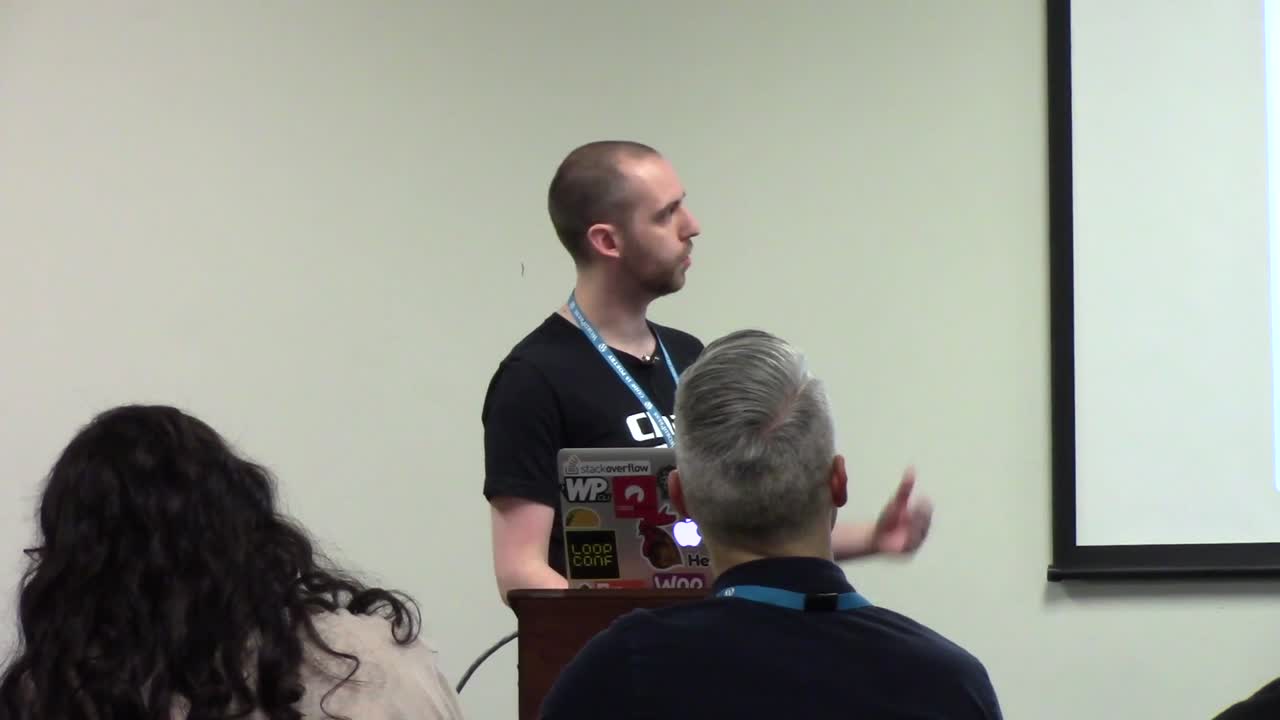
Chris Wiseman: A Modern WordPress WorkFlow
Wordcamp Halifax 2018Speaker: Chris WisemanJune 26, 2019 — An overview of some of the tooling that makes developing and maintaining WordPress a little easier. A high-level overview of Bedrock (including Composer), Twig templating with Timber, WP-CLI, Laravel Valet, Local by Flywheel, Visual Studio Code with helpful extensions and PHPCS.
-

Dave Braun: Discover How To Make More Time and Money with Proven Outsourcing
WordCamp Santa Clarita 2019Speaker: Dave BraunJune 26, 2019 — April 5, 2019, 11 am Vasquez Rocks Room, University Center, College of the Canyons —
Are you at the point in your web business where you can use some help, or know you will be soon, yet think you can’t afford it? Think again! At some point, if you want to get a part of your life back, and actually be able to relax, sleep, and not worry so much about your business, you’ll need to delegate your work to someone else. So why not build a capable but affordable virtual team to help? Dave Braun’s presentation shows you how to get started with one or more virtual assistant as well as some great tips for making them, and yourself, as productive as possible. -

Glenn Zucman: WordPress: Freedom is a Feature
WordCamp Santa Clarita 2019Speaker: Glenn ZucmanJune 26, 2019 — Why are you blogging? Most of us create content because we’re told we should, but not many of us know why. In this session, Glenn Zucman will talk about how you can work smarter rather than harder to create content that actually makes an impact on your business.
-

Mikey Veenstra: WordPress Incident Response: How Planning for the Worst Protects Your Site Today
WordCamp Santa Clarita 2019Speaker: Mikey VeenstraJune 26, 2019 — April 6, 2019, 10 am Horseshoe Ranch Room, University Center, College of the Canyons —
WordPress business owners have a lot to lose in the event of a successful cyberattack, and security awareness is at an all-time high as companies work to improve their security posture before the worst can happen. This is a good thing, of course, since an ounce of prevention is worth a pound of cure.However, many of those same companies don’t have a solid plan of action for when the worst does happen. A lack of a plan in the wake of an attack will delay response, increase downtime, and ultimately cost more money.
In this talk, Mikey Veenstra will discuss the elements of incident response planning that many business owners fail to address. Whether your business needs a full manual of contingency plans or just a folder with some phone numbers in it, you’ll leave ready to draw up a solid guideline to follow in the event that something goes wrong.
-

Chris Aldrich: Micropub and WordPress: Custom Posting Applications
WordCamp Santa Clarita 2019Speaker: Chris AldrichJune 26, 2019 — April 6, 2019, 3:30 pm Horseshoe Ranch Room, University Center, College of the Canyons — The W3C recommended Micropub specification (2017) allows developers to create custom posting applications for a wide variety of data targeting any content management system that supports the spec.
Chris Aldrich provides an overview of the available plugin and endpoint for WordPress and a variety of client applications like Quill, Teacup, OwnYourGram, OwnYour Swarm, Omnibear, that allow one to post status updates, bookmarks, likes, check-ins/location data, photos, and more directly to WordPress sites.
We’ll also talk about how developers can create custom posting interfaces to drastically simplify content creation and posting for clients in ways that can be even simpler than working with Gutenberg.
-

Mike Tanner: That Time I built a WordPress Site
Wordcamp Halifax 2018Speaker: Mike TannerJune 26, 2019 — Join Mike Tanner as he gives you his origin story of discovering WordPress. Mike covers selecting plugins all the way to (many) ‘rookie’ mistakes made along the way. What it’s like to start from nothing, and build that first website? Fun! Save yourself some time and have some laughs with with Mike.
-

Lisa Patts: How I Earn More and Work Less by Scaling my Local Service Business
Wordcamp Halifax 2018Speaker: Lisa PattsJune 26, 2019 — I have worked as a local freelance education professional for over two decades. After launching my online business, I now have customers around the globe. Instead of seeing just 10 local clients per day, I am able to service thousands of online customers daily.
Today we will walk through the steps I took to evolve my local freelance business to a global business.
If you’re a freelancer who earns their living “by the hour” this talk can help you develop a plan to cast a wider net and launch your online business, for free, using the tools provided by WordPress.
In this Session, Freelance To Free Launch, you will learn:
– Why you should scale your business to include the web.
– The 3 types of people you NEED to address to be successful online.
– How to design an array of products and services to satisfy customers from around the globe.
– 4 steps to launch your online business for free using WordPress.com and other free tools.I am not a web specialist. I am just a regular person who wanted to earn more and work less, and WordPress helped me do it. Billable hours are limited by manpower, the scope of the internet is nearly unlimited.
-

Jessi Gurr: Project Management for Developers
WordCamp Santa Clarita 2019Speaker: Jessi GurrJune 26, 2019 — April 6, 2019, 10 am Horseshoe Ranch Room, University Center, College of the Canyons — Whether you are working as a freelancer, or as part of a team, chances are that communicating with customers falls somewhere in your job description. As a website developer, you love the part of your job where you get to develop – but you also need to develop communication and project management skills to help you stay on top of projects, interact with your customers, and make sure that projects don’t spiral out of control or take more money or time than you budgeted.
In this talk, Jessi Gurr will discuss the basics of project management. You’ll learn techniques for getting a project started on the right foot – things like making sure that your customer contracts are crystal clear, and setting up clear timelines and project milestones. You’ll also learn how to handle scope creep, and how to deal with projects that have fallen off course.
-

Heather Deveaux: WordPress Helps Break Down Barriers for Small Business Owners
Wordcamp Halifax 2018Speaker: Heather DeveauxJune 26, 2019 — Everyday small business owners like you incur a range of expenses that can sometimes break the bank. Web design, launch, and maintenance doesn’t have to be one of those expenses. WordPress provides an opportunity to design and launch your own website so that you can maintain creative control, update when needed, and learn a few new skills along the way. Armed with just some Youtube videos, a notebook, and a pen, I quickly learned how to set up a WordPress website and launch my freelance writing business into the world. While many people are still afraid of what web development means and requires, WordPress makes it easy for anyone to become their own web developer, and in turn, reduce of the biggest barriers that small business owners face today. This talk explores how navigating a little discomfort in the beginning to learn how to set up and use a WordPress website can pay dividends throughout the life of your small business.

An  Brainchild
