
Language: English
-
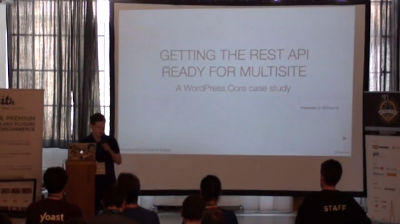
Felix Arntz: Getting the REST API ready for Multisite
WordCamp Torino 2017Speaker: Felix ArntzApril 14, 2017 — The REST API is one of the three major focuses that Matt Mullenweg announced for this year. On the other hand, Multisite has always been a minor focus on the WordPress project, as the number of its users is relatively low. However, those few who maintain larger WordPress setups usually activate Multisite and need its functionality as much as ever.
With WordPress 4.7, the REST API content endpoints were merged into core – however without any proper handling of Multisite. The Multisite team has stepped forward and announced getting the REST API compatible as their primary goal for 2017.
In his session, Felix will talk about the efforts of bringing Multisite endpoints to the REST API and the challenges that arise as a result.
-
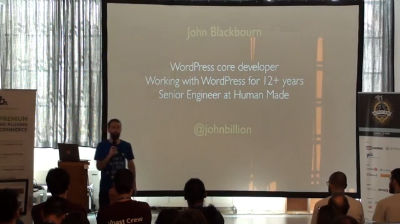
John Blackbourn: A Deep Dive into the User Roles and Capabilities API
WordCamp Torino 2017Speaker: John BlackbournApril 14, 2017 — The user roles and capabilities API is one of the most powerful APIs in WordPress. With it you can allow, deny, and customise access to features in WordPress to a fine grained level. In this presentation, I’ll talk through the basics and go on to explain some of the more interesting and advanced use cases of working with roles and capabilities.
-
Thomas Vitale: Getting Started With WordPress Plugin Development
WordCamp Torino 2017Speaker: Thomas VitaleApril 14, 2017 — WordPress Plugins are powerful tools that let us extend WordPress and turn it into whatever we want. What’s their secret? Join me if you want to know more about them and get started developing your own Plugin! I’ll tell you a story about magic, dangerous pirates, brave bowmen and ancient castles…
-
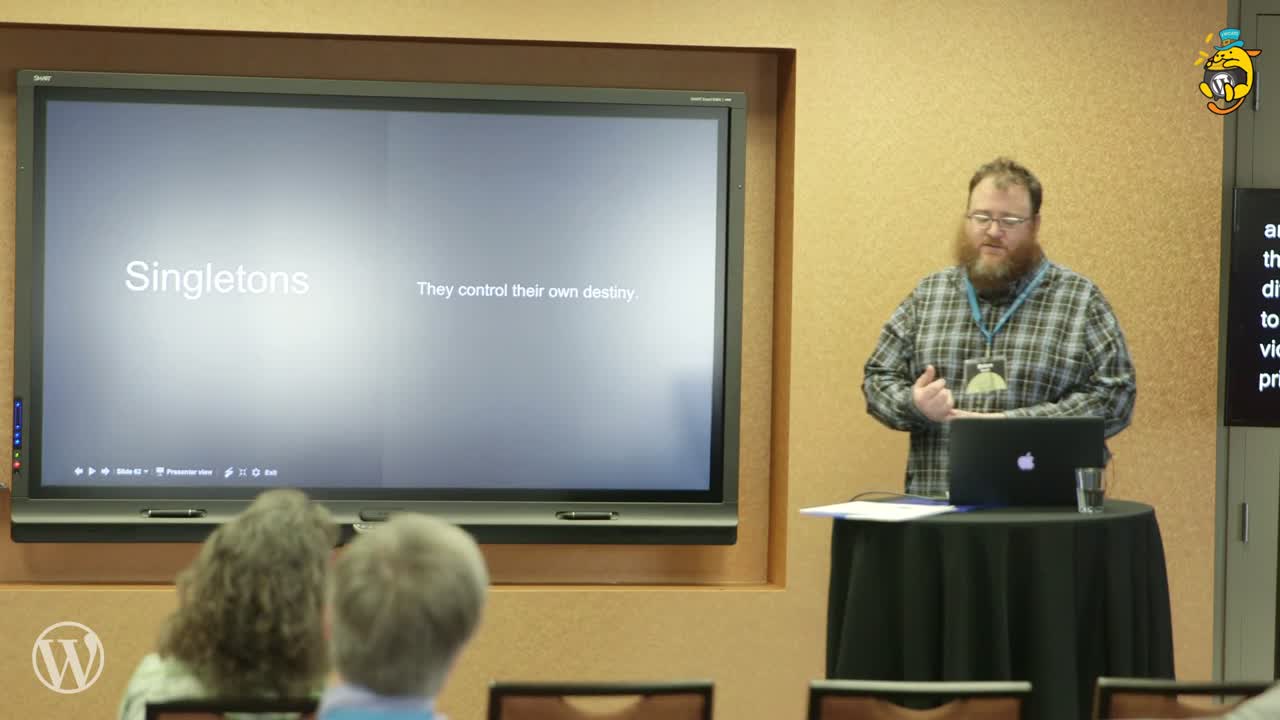
Brian S. Reed: Creating SOLID (not STUPID) Plugins and Themes
WordCamp Atlanta 2017Speaker: Brian S. ReedApril 13, 2017 — A dive into the mistakes we as developers make and the best practices we can employ in object-oriented programming and design. We start with an example plugin and remove issues addressed using the STUPID principles. We then apply the five basic principles of SOLID design ending up with a word class WordPress plugin.
STUPID: (Singleton, Tight Coupling, Untestability, Premature Optimization, Indescriptive Naming, Duplication)
SOLID (Single Responsibility Principle, Open/Closed Principle, Liskov Substitution Principle, Interface Segregation Principle, Dependency Inversion Principle)
-
Scott Fisk: Photography for Websites
WordCamp Atlanta 2017Speaker: Scott FiskApril 13, 2017 — You do not have to be a professional photographer to take (and find) quality photos for a website. Anyone who learns basic photo composition. Composition will be discussed. Learn how to take top-notch photographs geared specifically for implementation in website design.
-

Shelly Peacock: Framework Springboard- Build Faster and Better Websites in WAY Less Time
WordCamp Atlanta 2017Speaker: Shelly PeacockApril 13, 2017 — After this talk, you won’t ever have to pick a random theme again.
You will learn quick customization tips, and won’t fear the Functions.php file any more.
Also, we will incorporate Page Builders for even more speed and flexibility.Takeaways: Tons of resources, basic functionality of child themes and page builders, all built on a framework.
-

Isaac Irvine: Princess Leia Taught Me Everything I Need to Know About Design
WordCamp Atlanta 2017Speaker: Isaac IrvineApril 13, 2017 — You can have a bulletproof plan to complete a project, but you never know when a Sith Lord will crash the party and derail everything. As long as you can keep your head in the game and lean on friends when you need to, you’ll stay on target and come out on top. You might even get a medal for it.
Unless you’re a Wookie – Wookies don’t get medals. It’s sad.
-

Mike Demo: A/B Testing, Which Way Does Your Duck Face?
WordCamp Atlanta 2017Speaker: Mike DemoApril 13, 2017 — Do you know that if you have a picture of a duck having it face left or right can increase your conversions by 40%?
Think this sounds silly? It is, but backed by research. Spend some time to learn about what a/b testing is, what things to test, testing methodology and the best tools to use for your WordPress site.
Everyone will get a handout of the very same checklist I use when A/B testing our client’s sites. One of our clients, an insurance company, increased leads by making just a small 2px change.
-

Derek Hart: The Age of the Specialist – Running a Niche Design Business
WordCamp Atlanta 2017Speaker: Derek HartApril 13, 2017 — Instead of working for anyone and everyone, what if your company served a niche market? In an increasingly crowded field, many freelancers are finding success by focusing on a niche market. Settling on a niche can be a little intimidating at first, but on the other side is a business with more clients, higher rates, and more efficient workflow. If you’re a freelancer that has worked in every industry under the sun, yet can’t shake the feeling that your business could be something…more, this is your session. Hopefully, you’ll walk away inspired enough to come up with a brand new business model!
-
Luca Tumedei: Writing testable code in WordPress
WordCamp Torino 2017Speaker: Luca TumedeiApril 13, 2017 — If “WordPress is not testable” then why bother about testable code at all?
Because writing testable code is the first step to testing your code, testing your code is the first step to testing ALL your code, testing all your code is the first step to reduce shipping times, reducing shipping times is the first step to fast response to feature requests and bugs that makes clients happy.
And because the first sentence is less true every day.
Let’s find a definition of “testable code” that applies to both WordPress and the current practices of testing; let’s see how we can stop ignoring the elephant in the room and embrace testing with a sane approach that improves code and coders quality without leaving anyone out in the cold.
I will present real-world examples of new and existing code, the tools used to write and maintain testable code and some simple rule-of-thumbs to keep in mind when developing for our beloved CMS.

An  Thingamajig
