
Language: English
-
Joe Dolson: Accessibility Ready – Theming for a Larger Audience
WordCamp Chicago 2014Speaker: Joe DolsonJuly 23, 2014 — With WordPress 3.8, the theme repository supports a tag called ‘accessibility-ready’, to promote and identify themes that make it possible to build an accessible web site with WordPress. Learn what it takes to make a theme meet the accessibility-ready guidelines — and why we can’t call any theme “accessible.”
-
Chris Koerner: How to Get Involved with the WordPress Community
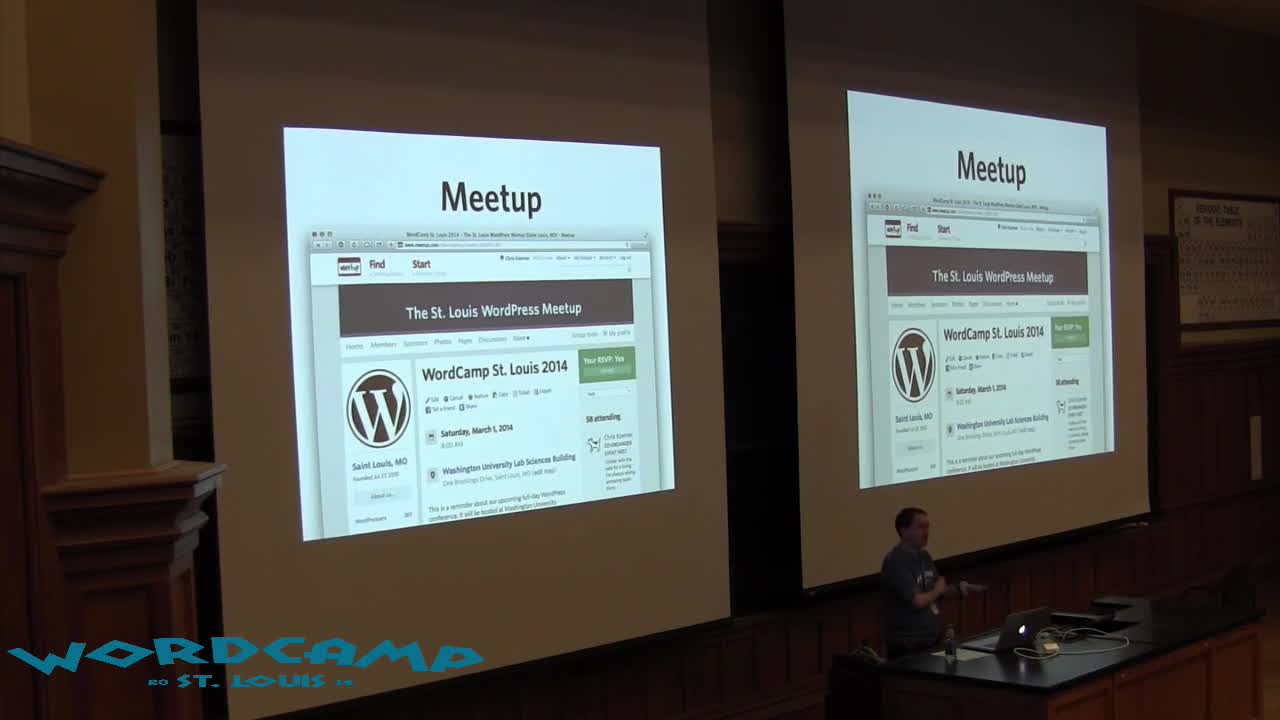
WordCamp St. Louis 2014Speaker: Chris KoernerJuly 22, 2014 — Where do you start? How do you meet people? Learn more about what can you do online and in-person to get involved in the WordPress community. This talk is about the opportunities that exist (like WordCamp!) but also things like github, irc, wordpress.org communities, and of course Meetup groups.
-

Mike Hale: Content Calendars for WordPress: Tips and Tools
WordCamp Chicago 2014Speaker: Mike HaleJuly 22, 2014 — Content calendars are a tool to plan and manage the content you will create for your site. For a multi-author blog it’s vital to controlling the chaos of rounding up writers and deadlines. This presentation covers the elements that make up a good content calendar and why they’re so useful. It will also take a look at tools to manage your content calendar and how to integrate it with your WordPress site. Topics include an overview of content calendar, what to include, using Evernote to manage a content content calendar & using Zapier to sync with WordPress, using the Editorial Calendar Plugin and CoSchedule.
-

Tracy Apps: How to Not Design Like a Developer
WordCamp Chicago 2014Speaker: Tracy AppsJuly 22, 2014 — Have you got enough WordPress hacking “skillz” to make your own custom themes, but they still look like crap? Don’t worry, there’s some simple steps and tools that can help you design less like a developer.
-

Patrick Rauland: Freemium For the Rest of Us
WordCamp Chicago 2014Speaker: Patrick RaulandJuly 21, 2014 — Freemium is a proven business model for plugins and themes. But what about everyone else? Can you improve your business by giving away some products for free and making money with premium products? Do you have to tell software or can it be other things? We’ll go over these questions as we look at the freemium model in general and how it can relate to other industries.
-

Yesenia Sotelo: Use Google Analytics to Improve Your WordPress Website
WordCamp Chicago 2014Speaker: Yesenia SoteloJuly 20, 2014 — Let’s say goodbye to being overwhelmed by the information in Google Analytics. This session covers just the data points that are most applicable to your website. And discusses what each data point is actually telling us about the areas of our website that need improving. Armed with our new data know-how, we walked through WordPress-specific ideas that you can use to start improving your site. (And to keep all of us focused on the data that matters, you’ll receive a link to a dashboard template that you can “save as” and use directly in your Google Analytics account.)
-

Helen Hou-Sandi: WordCamp Philly 2014 Keynote
WordCamp Philly 2014Speaker: Helen Hou-SandíJuly 20, 2014 — Keynote from WordCamp Philly 2014.
-
Sara Cannon: Smart Design – Icon Fonts, SVG, and the Mobile Influence
WordCamp Chicago 2014Speaker: Sara CannonJuly 17, 2014 — Fast, simple, SMART. Mobile devices have forever changed the way we interact with content. Now we have to consider many things such as HiDPI graphics, responsive design, speed, UI/UX patterns, touch target sizes, gestures, and more. All while not losing track of what’s important: Content.
In this presentation Sara discusses the influence of mobile on design trends and demonstrates implementation techniques of smart design such as icon fonts, svg, and other helpful tips.
-

Brennen Byrne: Passwords – The Weakest Link in WordPress Security
WordCamp Chicago 2014Speaker: Brennen ByrneJuly 16, 2014 — “The weakest link in the security of anything you do online is your password. It’s the key to your site, your email, your social networking accounts or any other online service you use. If your password is easy to guess, your online identity is vulnerable.” – The WordPress Security team (http://vip.wordpress.com/security)
Most WordPress sites are hacked because bad habits — and, more specifically, bad passwords. It’s easy to recommend better passwords, but this talk covers the technology that is changing how the password battle is being waged. Background on botnets, two-factor authentication, SSL, and password rot will accompany actionable advice any user can follow to secure their WordPress site.
-
Ross Johnson: Designing for the First Five Seconds
WordCamp Chicago 2014Speaker: Ross JohnsonJuly 16, 2014 — Designing for first impressions is no easy task. 50 milliseconds isn’t enough time to read a single line of copy or even fully comprehend what you’re looking at. So how can you design for good first impressions? The key is understanding human psychology and emotional reactions. Despite our highly evolved state, all humans have a subconscious “lizard brain” that makes lightening fast assessments about what feels good or bad. If you understand the lizard brain, you can use design to illicit positive first impressions. This talk discusses the lizard brain and how it secrets influences our actions and thought. It then covers the framework for emotional reactions and how you can use design to illicit positive reactions to visual stimuli.

An  Creation
