
Language: English
-

Michael C. Breuer & David Luecke: Pro Level Workflow
WordCamp Calgary 2014Speaker: Michael C. BreuerOctober 5, 2014 — Michael and David shows you some of their tips, tricks and best practices for developing custom themes for WordPress. Learn how to set-up a workflow that transitions a freelance methodology right to the collaborative environment of an Agency. They touch on how to use Git, local environments and how to master your own development workflow to run with the pros.
-

Jeremy Pry and Liam Dempsey: Teaching a Designer to Use Github
WordCamp Philly 2014Speakers: Jeremy Pry, Liam DempseyOctober 4, 2014 — As a tag-team of developer and designer, Jeremy Pry and Liam Dempsey will talk through how designers can embrace version control to better manage their WordPress code. The talk covers not only a bit of “how to get started” but also a discussion of work flow.
-

Sue Anne Reed: WordPress for NonProfits
WordCamp Nashville 2014Speaker: Sue Anne ReedOctober 4, 2014 — Can Your Nonprofit Use WordPress as Your CMS? Yes You Can!
WordPress is a world-class CMS, but can your nonprofit use it and still be able to process donations, sign up people for your email list, promote advocacy and other nonprofit-specific tasks? Yes You Can! Walk through several examples of nonprofits that are using nonprofit as their primary CMS and either using WordPress plugins – like Wufoo – to process donations or tying into the APIs of nonprofit CRMs (Convio Luminate, Salsa, etc.). -

Jen Ecker: Intro to Starter Themes
WordCamp Maine 2014Speaker: Jen EckerOctober 4, 2014 — Have you ever wanted to try your hand at theme design, but didn’t know where to begin? Starter themes are a great way to get your feet wet. They do all the heavy lifting programmatically and give you a blank slate to let you focus on your theme design. After this talk, you will have an understanding of what a starter theme is and a knowledge of the top starter themes available as well as the pros and cons of each.
-

Rachel Baker, Sam Hotchkiss, Xiao Yu, Patrick Rauland, Konstantin Obenland: Panel Discussion – Development
WordCamp Maine 2014Speakers: Rachel Baker, Sam Hotchkiss, Xiao Yu, Patrick Rauland, Konstantin ObenlandOctober 3, 2014 — Panel discussion on WordPress development moderated by RC Lations
-

Steve Wilkison: Custom Queries: How, What, When, Where & Why
WordCamp Nashville 2014Speaker: Steve WilkisonOctober 3, 2014 — If you want to work with WordPress one of the very first things you need to understand is the concept of the “the loop.” When information needs to be displayed on a page the loop makes a “query” to the database, basically asking for said information. If you wish to customize any aspect of a theme or site you will want to learn how to customize the loop and the query to do exactly you want. There are three different ways you can customize the loop functionality: 1. query_posts(); 2. WP_Query(); and 3. get_posts(). In this presentation we look at each of these three techniques. We discuss what they have in common, what they do differently and when, where and why you would want to use each one. Concrete examples will be used to take all the mystery out of making custom queries via the WordPress loop.
-
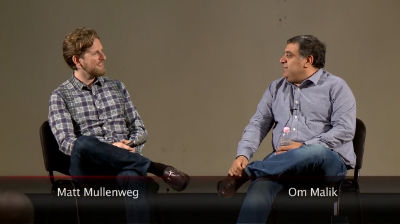
Matt Mullenweg & Om Malik: Q&A
WordCamp Europe 2014Speakers: Matt Mullenweg, Om MalikOctober 3, 2014 — For an hour Matt was answering questions. First, by his friend and top tech journalist Om Malik, then by the audience.
-
Rick Knudtson: Designing Applications on WordPress
WordCamp Kansas City 2014Speaker: Rick KnudtsonOctober 3, 2014 — This talk is about practical examples of using WordPress for more than just brochure sites or classic CMS. It walks through consumer facing apps and internal process apps like CRMs. And provides real world apps out in the wild and walks through how we went about building WeHeartDesigners.com as an example.
-

Rian van der Merwe: How to build an audience in 743 difficult steps
WordCamp Cape Town 2013Speaker: Rian van der MerweOctober 1, 2014 — The biggest question every writer asks when they start publishing online is, “How do I get people to read my stuff?” There are many answers to this question, and these answers are usually now referred to as “content marketing”.
In this talk Rian van der Merwe shares why it is better to stay away from the easy ways and choose the difficult ways instead, and how a struggling blog with an insignificant number of readers can become not only a source of great joy and expression, but also a source of non-insignificant income.
-

Kurt Archer: WordPress 3.9.1 Walkthrough
WordCamp Calgary 2014Speaker: Kurt ArcherOctober 1, 2014 — Front-end Developer Kurt Archer walks users through all the new features and shortcuts of WordPress 3.9.1. (commonly referred to as Smith). By the end of this session, you’ll have some more tricks in your web design and content creation arsenal.

An  Brainchild
