
Speakers: K. Adam White
-
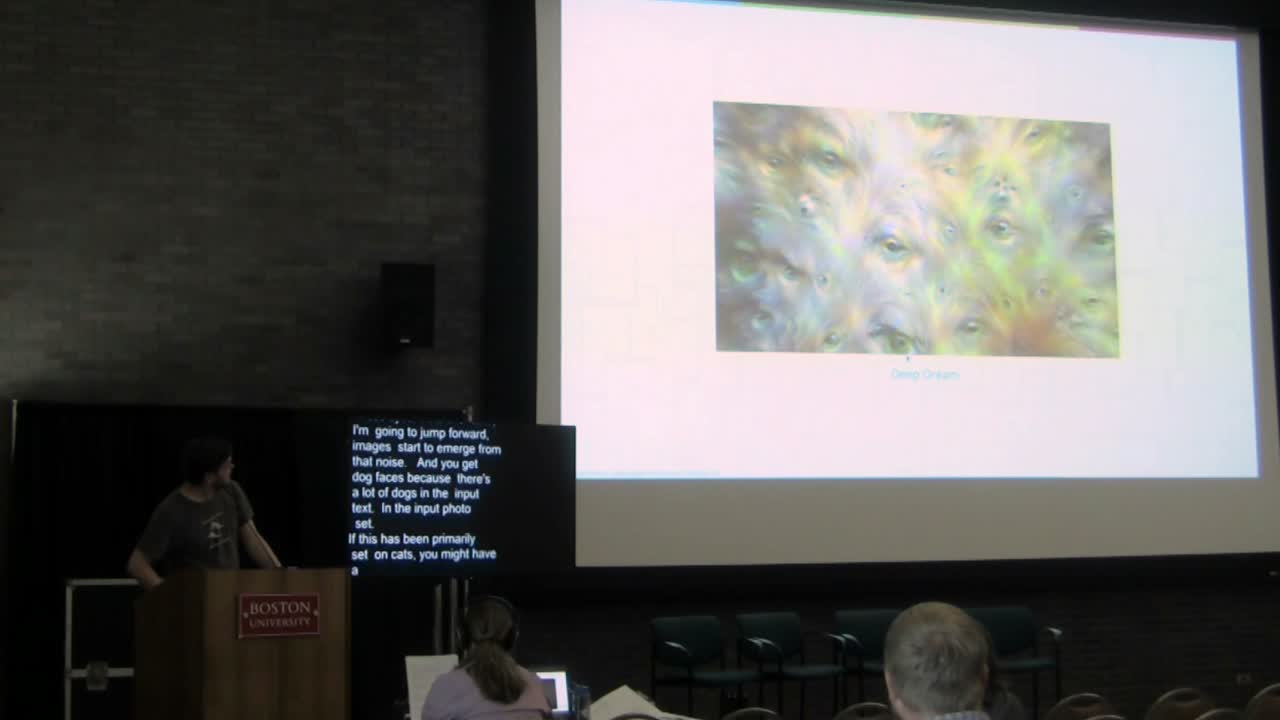
K.Adam White: Machine Learning with WordPress
WordCamp Boston 2016Speaker: K. Adam WhiteAugust 14, 2016 — Machine learning, and in particular “deep learning”, have been in the news a lot lately: machine learning lets Google make psychedelic images; machine learning is helping computers to read handwritten text; machine learning lets Facebook match web users to advertisements; machine learning is being used to discover new construction materials. But what is it, and why does it matter to writers? In this talk we’ll learn the basics of neural networks, and see how poets and other writers can use machine learning techniques for creative results.
-

K. Adam White: Using the REST API and JavaScript to create better WordPress interfaces
WordCamp Europe 2016Speaker: K. Adam WhiteJune 30, 2016 — n this talk we’ll discover the breadth of new WordPress interfaces enabled by leveraging the WordPress REST API, such as visualizations and new editor experiences. How can our API client libraries and the applications that use them be designed for maximum flexibility? The future of WordPress is not one interface, but many.
-

K.Adam White: Modular JavaScript
WordCamp Providence 2014Speaker: K. Adam WhiteAugust 1, 2015 — You can make your codebase much easier to maintain and expand by breaking your scripts up into modules, encapsulating different logical units in their own files, which makes developing and debugging simpler.
Learn how to break your scripts up into smaller files to make coding and debugging your plugins more manageable, and how to use a build process to reconstruct them into a single file for release.
-

K. Adam White: WordPress in Weird Places: Content Management for Node Using REST
WordCamp San Francisco 2014Speaker: K. Adam WhiteNovember 3, 2014 — In January my team was looking for the best available Node.js content management system… and we picked WordPress! Our clients got all the benefits of WP’s content editing interface, and with the in-development REST API plugin we were able to use that content without limiting any of our other technology choices. This talk uses our project as a case study to share lessons we learned while building a Node client for the API, and why we’re so excited about what the next year holds for the evolution of WordPress as a content platform.
-

K.Adam White: Modular JavaScript
WordCamp Chicago 2014Speaker: K. Adam WhiteJuly 14, 2014 — We’re long past the days where a few lines of JavaScript in a single .js file cut the mustard—modern web applications can involve thousands of lines over hundreds of files, and WordPress themes and plugins are heading in that direction fast. You can make your codebase much easier to maintain and expand by breaking your scripts up into modules, encapsulating different logical units in their own files. Learn several ways to modularize your code, with a focus on AMD and Require.js. And take a quick peek into the future to discover the native module syntax coming in the next version of JavaScript!
-

K. Adam White: Building Apps With Backbone.js and WordPress
WordCamp Chicago 2013Speaker: K. Adam WhiteOctober 20, 2013 — This talk looks at several ways to integrate Backbone into your WordPress site, including how to create better interfaces inside the WordPress admin and improve the structure of the JavaScript code in your client theme. It also walks through the design of a small Backbone web app that just uses WordPress for its admin capabilities, and gets all its data through a JSON API!
-

K Adam White: Evolving Your JavaScript with Backbone.js
WordCamp Providence 2013Speaker: K. Adam WhiteSeptember 5, 2013 — This presentation looks at several ways to integrate Backbone.js into your WordPress themes and plugins, including a step-by-step demonstration of how Backbone improves the quality of your existing jQuery code. It also walks through other exciting ways to use Backbone alongside WordPress, including how to make a standalone Backbone application that only uses WordPress for its data.
-

K.Adam White : Underscore and Backbone: jQuery’s New Friends
WordCamp Providence 2012Speaker: K. Adam WhiteJune 23, 2013 — This presentation focuses on the basics of how to use Underscore to make your theme and plugin scripts more efficient. It touchs on the significance of adding Backbone to core and provides some resources for Model-View-Controller (MVC, or “MVWTF”) JavaScript development on top of WordPress.
-

-
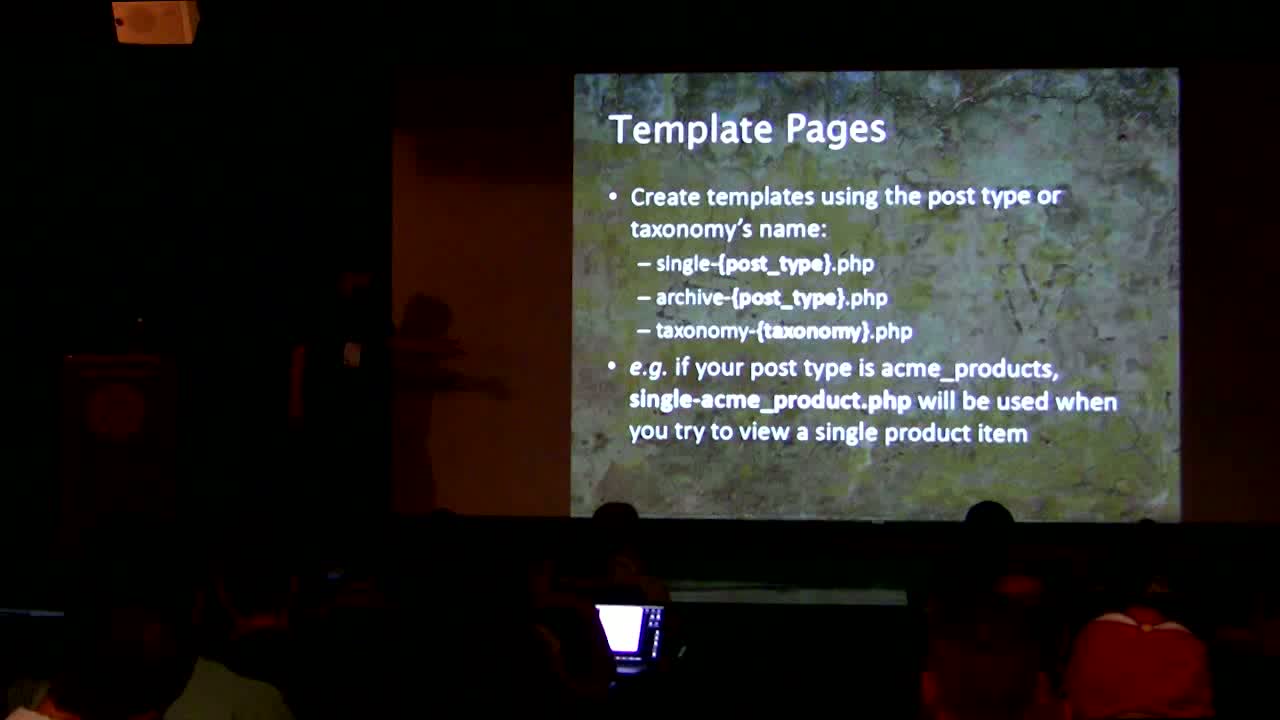
K. Adam White: Stepping into Custom Post Types
WordCamp Boston 2011Speaker: K. Adam WhiteSeptember 25, 2011

An  Ruckus
