
Author Archive
-

Domagoj Gojak: Easy Form Creation and Validation with Formjack
WordCamp Croatia 2015Speaker: Domagoj GojakJanuary 18, 2016 — Formjack is a brand new open source PHP library meant for easy form creation, implementation and validation. In this short presentation we will take a look on how this minimalistic library helps us to quickly implement a custom form into our WordPress site and how can we use the internal validator to do a fairly complex data validation with just “few lines of code”.
-
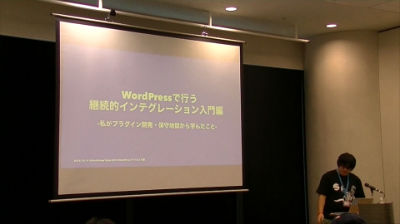
Hiroshi Urabe: WordPressで行う継続的インテグレーション 入門編 -プラグイン開発・保守地獄から学んだこと-
WordCamp Tokyo 2015Speaker: Hiroshi UrabeJanuary 18, 2016 — “継続的インテグレーション、CI(英: continuous integration)とは、主にプログラマーのアプリケーション作成時の品質改善や納期の短縮のための習慣のことです。(wikipedia引用)
約4年ほどWordPressプラグインを開発・保守してきた中で、様々なトラブルに見舞われたりしてきました。
「継続的インテグレーション」を自分の開発スタイルに導入することで、そこから抜け出した話など自分の経験と実例を交えてお話しします。* コピペプログラマーだった僕がプラグインをリリースしたその後。
* WordPress のプラグインでの具体的なテストコードの書き方。
* テスト駆動開発のススメ。
* テストをサポートするツール群の紹介。「テストコードって書いてみたいけど、どうやって書くんだろう?」、「プラグインのアップデートつらい!」などの悩みを持つ方の手助けになればと思います。”
-

Tomasz Dziuda: Wprowadzenie do WP-API
WordCamp Krakow 2015Speaker: Tomasz DziudaJanuary 17, 2016 — Prezentacja, którą wygłosił Tomasz podczas WordCampa, składa się z dwóch części:
WPROWADZENIE TEORETYCZNE DO PODSTAW WP-API
Możliwości jakie ze sobą ono niesie, przykłady wykorzystania oraz analizy jego potencjalnego wpływu na przyszłość WordPressa.
PRAKTYCZNY PRZYKŁAD WYKORZYSTANIA WP-API
Jak stworzyć motyw, będący SPA (Single Page Application), korzystającą z danych zgromadzonych w WordPressie.
-

Jean Perpillant: Custom Built Themes vs. Premium Themes: Advantages and Disadvantages of Both
WordCamp Orlando 2015Speaker: Jean PerpillantJanuary 17, 2016 — You’re getting ready to build your website. Or maybe you’re thinking of a complete redesign. There are plenty of options out there in the world of WordPress, and building a custom design or purchasing a premium theme are crucial decisions you need to make and live with. Each have great benefits and equal pitfalls, but key knowledge on them will help you succeed.
-

Frank Corso: Must Have Blogging Tools
WordCamp Orlando 2015Speaker: Frank CorsoJanuary 17, 2016 — Learn about amazing tools to help you improve your blogging. We will go over a variety of tools including tools for idea generation, planning, creating, editing, and marketing. Take your blog to the next level by learning about these tools today!
-

Jesse Petersen: Mobile-First Design: How and Why Mobile Design Comes First
WordCamp Orlando 2015Speaker: Jesse PetersenJanuary 17, 2016 — A complementary look at my WordCamp Tampa 2015 “Mobile-First Development: Why and How” talk, we’ll look at the design aspects of what mobile-first is and what it entails. We’ll look at examples of great designs and some pitfalls to avoid, as well as my pet peeves as a mobile consumer of content.
How many of us use services like Pocket to get a nice view of the content because the site owner didn’t account for mobile or did a poor job of it? I Pocket over 1.5 million words last year avoiding poorly-designed mobile sites.
-

Amit Bajracharya: Website Conversion
WordCamp Nepal 2015Speaker: Amit BajracharyaJanuary 17, 2016 — Amit Bajracharya, currently working in Project Management department at Leapfrog Technologies and founder of thebootstrapthemes.com. He talked about Website conversion, the most important factor to the success of the online marketing strategy and goals.
-

Tracy Apps: Please Design Responsively
WordCamp Toronto 2015Speaker: Tracy AppsJanuary 17, 2016 — So many devices, so little time! Learn how to efficiently and effectively design your website so it will look amazing… from mobile to big screen (and everything in-between)! A combination of strategy, design and code tips for designing for all devices. A little something for everyone (and most technical levels).
-
Tom Auger: Scoping and Budgeting Projects with Usage Modeling
WordCamp Toronto 2015Speaker: Tom AugerJanuary 17, 2016 — In the field of Information Architecture (IA) and User Experience Design (UX), there is a practice known as Usage Modeling, which maps user scenarios and stories to business priorities. This technique has been traditionally employed in software development to help define the Minimum Viable Product (MVP) for first candidate release.
In this session, you will learn how the Usage Modeling process can be applied to your or your clients’ website and mobile projects to:
– put the end-user first
– prioritize features
– scope out functionality you thought was important (but isn’t)
– determine an appropriate budget for the projectThe format of this session is unique: part lecture, part hands-on simulation of an actual Usage Modeling Workshop in the boardroom so you can experience the methodology first-hand with a seasoned facilitator.
If you are considering a large web project for yourself or your organisation, or if you often quote on web work for clients, then this session is not to be missed!
-

Christine McGlade: User Experience Design and Business Innovation Mashups That Add Value
WordCamp Toronto 2015Speaker: Christine McGladeJanuary 17, 2016 — Education, Media, and Public Service are having their business and service delivery models disrupted. Sometimes, they haven’t fully internalized customer, student, or patient-centric business drivers, and sometimes they can’t justify budget line items related to user-centered design in this fiscally constrained environment.
The result is that designers may need to “disguise” user-centered design methods behind other processes, and play it fast and loose with research methodologies to get the job done, while speaking to clients in a language they can both understand and get behind.
In this session, Christine will illustrate how she has enlisted scenario planning, a facilitation methodology used in strategic business planning, as a tool to effectively create user personas and journey maps with simple and clear implications for adaptive content delivery. She will walk through how a traditional sales and marketing funnel became a powerful model to structure just-in-time content delivery for a healthcare client to progressively disclose information at exactly the right level of complexity for the user. And how she has used process design exercises to enlist active participation of clients in the UX design process that has helped them improve their service delivery.
When we mashup user experience design practices with strategic planning and other, sometimes non-traditional business processes, we add value to organizations that goes well beyond the user experience. It helps them to be better at doing what they do.
This session will be of interest to project leaders who want to better understand how to “sell” user experience design, as well as user experience designers who want to learn about new ways of approaching clients who may not understand what they do. Knowledge of standard user experience design methodologies is a must, as is a desire to learn about new ways to work with business leaders to help them derive more business value from their website or app design.

An  Invention
