
Language: English
-

WordPress Community Interview With Tsetan Dolkar
WordPress Community Interview SeriesSpeaker: Tsetan DolkarFebruary 6, 2017 — Tsetan Dolkar lives in Dharamshala, India and is a designer / developer at Tibetan I Tech.
She became interested in computer technology while spending time in a cyber cafe.
-

Sam Bizri: Edupreneurship With WordPress
WordCamp Sydney 2016Speaker: Sam BizriFebruary 5, 2017 — Create your own Udemy, Coursera or Khan School through WordPress.
Plan, design, build and deliver online training courses for your product and services utilising some of the best plugins and themes to run your websites in both private or public mode; Free or paid courses by converting the CMS to an LMS.
Learn how to create simple “Micro Courses” that can get your websites up and running using eLearnning authoring tools.
-

Ricky Blacker: How WordPress Changed My Life!
WordCamp Sydney 2016Speaker: Ricky BlackerFebruary 4, 2017 — This is the story of how I became involved with WordPress, and the WordPress community, and also how attending WordCamp Sydney 2014 changed my life.
It will give examples of how giving back to WordPress can be beneficial in many ways, and also hopefully inspire those just embarking on their WordPress journey to follow their dreams, and maybe even some tidbits for seasoned WordPressers.
-

Robert Wilde: WordPress Workflow – From Dev To Staging To Production
WordCamp Sydney 2016Speaker: Robert WildeFebruary 4, 2017 — Whether you’re working on custom themes or custom plugins, a good development workflow is critical. I would like to walk you through some great ideas to streamline and simplify the process as much as possible.
We will look at starting a brand new project and go from dev environment through to production as well as an existing site being brought to local dev, up to staging and back again.
All the tools, tips, and tricks you need to ensure each and every project runs as smooth as silk.
-

Peter Wilson: Contributing to WordPress Core
WordCamp Sydney 2016Speaker: Peter WilsonFebruary 3, 2017 — Almost everyone will have heard the phrase “don’t hack WordPress core” before, what’s less known is that it’s only the start of the saying. Don’t hack WordPress core, without contributing the hacks back.
Contributing to WordPress core is like riding a bike, it takes a little effort to get started but once you learn it’s a skill you’ll never forget.
You will be given a jump start on contributing, from how to use the bug tracker all the way to contributing a patch and getting your first props.
-

Nik Cree: Anatomy Of The Perfect Website – Building A Powerful Profitable Website For Business
WordCamp Sydney 2016Speaker: Nik CreeFebruary 3, 2017 — Having built hundreds of websites for clients over the past 8 years I see some things that work exceptionally well every time and other things that are invariably almost always failures.
Putting a website together is a science but not rocket science, and I will show you how we do it with our clients.
Simple things like…
* How big to make the logo and were to place it
* Why you should never use stock images
* Why the worst place to start is to replicate competitors websites
* How to automate your marketingto…
* The most effective call to action
* The highest converting instruction on a contact form
* Optimal layout of the header, sidebar, footer, body
* Quick hacks to getting high converting copy -

Kris Howard: My Website Is Old Enough To Vote
WordCamp Sydney 2016Speaker: Kris HowardFebruary 3, 2017 — The Web is an industry that thrives on the new… but what about building sites that last?
In 1996, I used my newly acquired HTML skills to build a fan site for my favourite author.
Twenty years later, the site – roalddahlfans.com – is still alive and kicking.
I’ll trace the development of the site over the years, which mirrors both my own career journey as a developer and the trajectory of the web as a whole.
I’ll also talk about the challenges I faced during my recent 6-month project to convert the whole site – nearly 1500 pages – to WordPress, dragging it into the 21st century at last.
-

Kate Toon: How To Make Google Love Your WordPress Site
WordCamp Sydney 2016Speaker: Kate ToonFebruary 3, 2017 — We know that WordPress is one of the most SEO friendly CMS platforms out there.
So why do so many website developers build websites that make Google cry?
And why do business owners think that applying SEO to a WordPress site is as simple as installing the Yoast plugin?In this presentation, I’ll tell you the tips, techniques and tactics that I use to help make sites 100% Google lovable, including:
* The impact of hosting and domain choice
* Integral set up steps that boost SEO friendliness
* My top 10 Plugins to improve SEO
* Easy peasy content formatting
What to consider when offering on going SEO packages -

Kat Slump: Making Free Stuff Work for You
WordCamp Sydney 2016Speaker: Kat SlumpFebruary 3, 2017 — A “how-to” on using free resources to design, develop, and launch a killer website that will work for your business.
In this talk, we will touch on everything from the goal of your site, to the character it portrays, all while making use of quality free resources such as themes, plugins, fonts, and analytics.
-
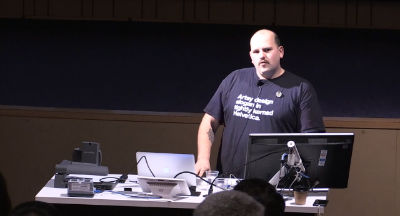
Jordan Gillman: Questioning The Journalistic Status Quo
WordCamp Sydney 2016Speaker: Jordan GillmanFebruary 3, 2017 — I’m currently in the process of embarking on a relaunch of Eternity News with the Bible Society of Australia.
Eternity News has been a print publication for many years – and are just now launching their own foray into the world of online news (after being part of the Bible Society website for many years).
With a crack team of ex Fairfax/ABC staff and a blank slate for what a ‘news’ site is – we’re hoping to question the conventions of how a news website works – all on top of WordPress.
I’ll be talking through some of the process, decisions and development we undertook to get there.

An  Experiment
