
‘Accessibility’ Videos
-

Cynthia Ng: Making Accessible Content and Websites in WordPress
WordPress Meetup Cowichan ValleySpeaker: Cynthia NgOctober 26, 2018 — Cynthia Ng (@TheRealArty) gives us her views on Accessibility on Content and WordPress websites with a special focus on the laws in Ontario, Canada.
Presentation given at Cowichan Valley WordPress Meetup. -

Carlos Murillo: Implementando Accesibilidad
WordCamp San Jose 2018Speaker: Carlos MurilloOctober 22, 2018 — La Web está diseñada para serle útil a todas las personas y al alcanzar este objetivo, es accesible para personas dentro de un rango muy diverso de capacidades auditivas, de movimiento, visión y habilidades cognitivas. Es muy importante que la Web sea accesible para así brindar un acceso equitativo en igualdad de oportunidades a las personas con discapacidad.
-

Izabela Mrochen: Dostępne i użyteczne strony na WordPressie. Dobre praktyki w zapobieganiu wykluczeniu cyfrowemu i sp
WordCamp Poznań 2018Speaker: Izabela MrochenSeptember 24, 2018 — Na przestrzeni ostatnich lat proces globalizacji zmusza właścicieli sklepów, biur podróży, instytucji szkoleniowych, itp. do udostępniania swoich usług w Internecie. Mimo iż szybko rozwijające się nowe technologie umożliwiają tworzenie serwisów internetowych, nie każdy użytkownik Internetu może dotrzeć do potrzebnej informacji gdyż są grupy, które nadal napotykają bariery w cyberprzestrzeni.
Dlatego na przełomie XX i XXI wieku, Konsorcjum W3C (World Wide Web Consortium) oraz Parlament Unii Europejskiej podkreśliły potrzebę ujednolicenia i ustandaryzowania serwisów, portali i stron internetowych w taki sposób, aby każda grupa użytkowników mogła swobodnie dotrzeć do potrzebnej informacji. Dzięki wdrożeniu wytycznych dla dostępności treści internetowych 2.0 (Web Content Accessibility Guidelines – WCAG 2.0), dostęp do obrazów, infografiki, wykresów, zawartości multimedialnej jest możliwy dla osób marginalizowanych. Przede wszystkim osoby starsze czy osoby z niepełnosprawnościami są wykluczone cyfrowo, gdyż mają kłopot z odczytaniem czy wysłuchaniem treści zarówno tekstowej jak i nietekstowej.
W efekcie projektanci stron, redaktorzy, tłumacze czy dziennikarze odpowiedzialni za treści, powinni realizować odpowiednią strategię budowania stron internetowych dla wszystkich, aby przedstawiane informacje były dostępne, zrozumiałe i możliwe do odczytania szczególnie przez osoby korzystające z czytników ekranu czy z dysfunkcją słuchu.
W wirtualnym społeczeństwie multimodalna komunikacja powinna przebiegać szybko, bez ograniczeń i barier. W czasie wystąpienia autorka odniesie się do zasad dostępności treści zawartych na stronach internetowych wskazując na sposoby wdrożenia zasad WCAG 2.0 (2.1) aby każdy użytkownik Internetu, w szczególności stron zbudowanych na WordPressie, miał możliwość eksploracji zawartości i odkrywania wiedzy bez poczucia wykluczenia cyfrowego.
-

Mikołaj Rotnicki: Jak to widzę, słyszę, czuję? Dostępność stron opartych na WordPressie dla osób z niepełnosprawnościa
WordCamp Poznań 2018Speaker: Mikołaj RotnickiSeptember 24, 2018 — – Technologie asystujące
– Demonstracja obsługi stron opartych na WordPressie za pomocą czytnika ekranu
– Motywy „Z myślą o dostępności” w praktyce
– Wtyczki zwiększające dostępność stron opartych na WordPressie
– Standardy i dobre praktyki dostępności
– Krótkie Q&A -
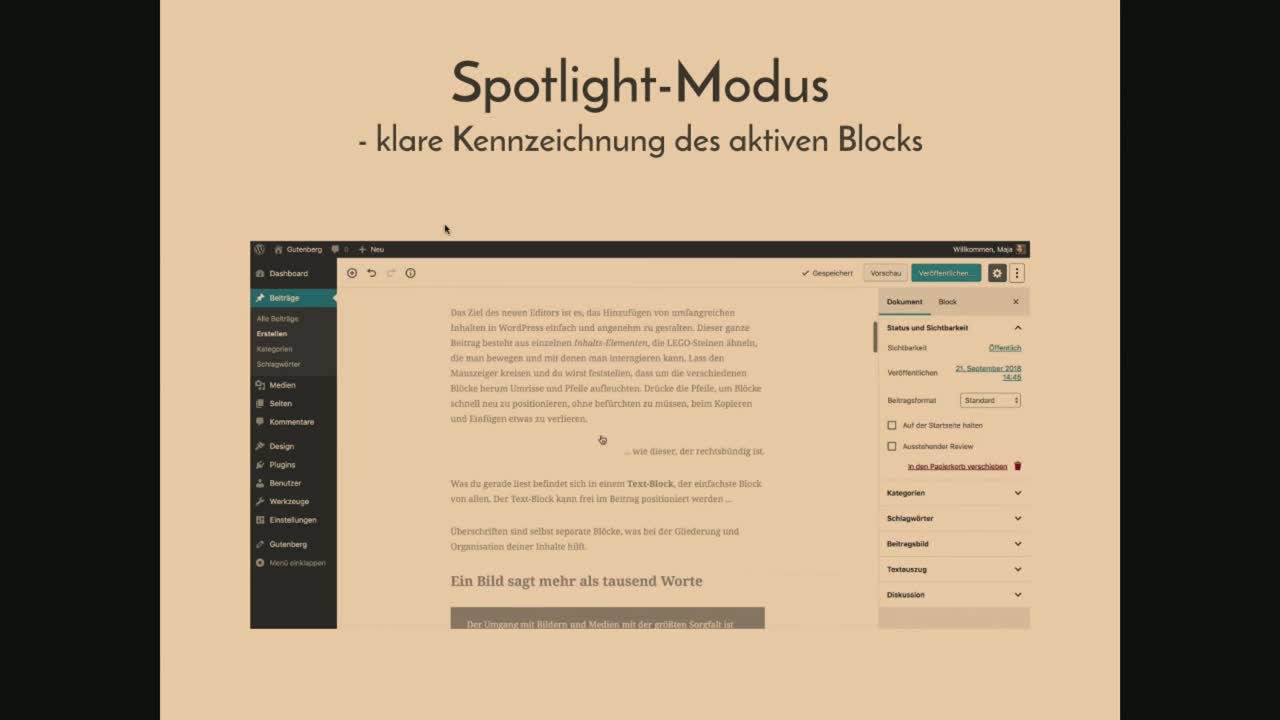
Maja Benke: Wie Gutenberg dich zum A11y-Superhelden macht
WordCamp Würzburg 2018Speaker: Maja BenkeSeptember 24, 2018 — BarCamp Track
-

Jeannette Washington: The Dyslexic Code
WordCamp For Publishers: Chicago 2018Speaker: Jeannette WashingtonAugust 31, 2018 — One size doesn’t fit all. This hands-on discussion will address accessibility for individuals who exhibit dyslexia and other language based disorders. The surface will be scratched in distinguishing the varying features of dyslexia by providing a virtual experience. Further, learn how you can be empowered to create hacks that meet you wherever you are.
-

Susan Price: Connecting through Voice
WordCamp For Publishers: Chicago 2018Speaker: Susan PriceAugust 23, 2018 — This talk looks at new ways to connect with a global audience while offering people with disabilities better access to your website’s content. See how Amazon’s (AWS) Translate and Polly are being used with WordPress to increase engagement and accessibility.
-

Christine Laikind: Making the case for accessibility
WordCamp Atlanta 2018Speaker: Christine LaikindAugust 22, 2018 — Christine Laikind, born deaf, and founder of SCS Digital Marketing has made it her mission to share her knowledge and experience about (lack of) accessibility and website compliance to the WordCamp attendees.
-

Kim Camp Smalley: Evaluating The Accessibility Of Websites
WordCamp Atlanta 2018Speaker: Kim Camp SmalleyAugust 9, 2018 — The number of companies facing legal action for inaccessible websites is on the rise. Inaccessible websites and digital content can limit access to users with disabilities. WordPress users can employ web accessibility evaluation tools to help determine if their content is accessible to users with disabilities. This session will provide an overview of several WordPress plugins, web-based tools, and accessibility resources. Designers, developers, and content creators can utilize these tools to evaluate websites against recognized guidelines and create a better user experience.
Takeaways:
-Understand the laws and standards regarding web accessibility.
-Great techniques and tools to evaluate your WordPress site for accessibility.
-Identify the limitations of automated evaluations. -

Rian Rietveld, Sami Keijonen: Testing Web Accessibility
WordCamp Europe 2018Speakers: Rian Rietveld, Sami KeijonenAugust 6, 2018 — People use different ways to interact with the web. Users navigate for example with a keyboard only or with their voice. To make this work properly, it ‘s necessary that the design, code and content is properly set up, accessible for all devices and users. How do you test the accessibility of a design, code and content of a web project? What are the guidelines to test against?
We will go through the different ways to use the web, which guidelines to use, what to look out for when checking for accessibility errors and which checks and tools you can use to help you test. We will also discuss a setup for automated testing. Bring your laptop and join in.
This workshop is for people who develop, design and write content, of all levels.

An  Brainchild
