
Language: English
-

Steve Zehngut: Five Reasons to Move to Headless WordPress
WordCamp Los Angeles 2020Speaker: Steve ZehngutOctober 28, 2020 — This talk examines five elements of headless WordPress in-depth to help you evaluate if this is the right choice for your project.
-

Michelle Hayes: What is a Plugin and How do You Find the Good Ones?
WordCamp Rochester 2020Speaker: Michelle HayesOctober 28, 2020 — We will start at the beginning to understand what a plugin does and why you would want one. We will answer common questions like:
– Where do you find plugins?
– How do you know which plugins are good?
– How many plugins should you have?
– How can you find out more about a plugin before you download or purchase it?
– How can you work with a plugin developer to fix issues you are having with the plugin? -

Joe A Simpson Jr: Ouch! WordPress Accessibility That Should Not Hurt
WordCamp Rochester 2020Speaker: Joe A Simpson Jr.October 28, 2020 — One evening at a WordPress Meetup presentation in a northern valley of Los Angeles, an attendee turned and punched Joe A. Simpson, Jr, in the arm saying, “accessibility makes me sooooooo angry!” Why does baking even the most basic WCAG 2.0 guidelines into your project cycle create such a reaction?
In this presentation, we’ll debunk common misconceptions designers, developers, and business owners have and learn how advocating for access to all improves your site SEO, design, user experience, and function through interactive audience examples and discussion to ease the pain of compliance.
-
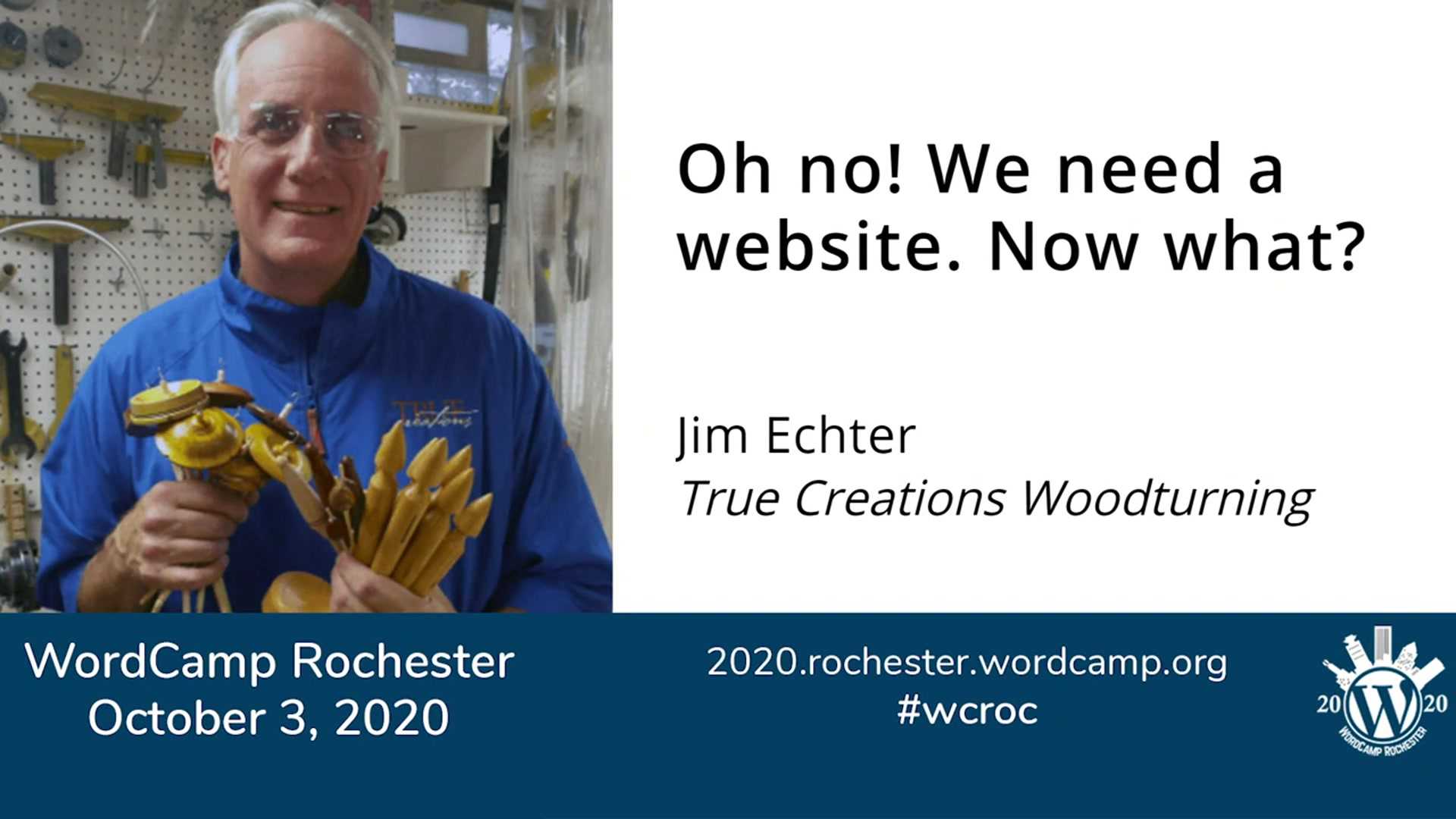
Jim Echter: Oh no! We need a website. Now what?
WordCamp Rochester 2020Speaker: Jim EchterOctober 27, 2020 — This talk describes the journey of a “mere mortal” (not a web professional) to learn WordPress and build four sites to support his family businesses.
-

Joost de Valk: Making sure your content is found – 2020 edition
WordCamp Bulgaria 2020Speaker: Joost de ValkOctober 26, 2020 — 10 years after presenting at WordCamp Bulgaria for the first time, Joost is back, presenting with the exact same topic, but wildly improved suggestions. He also says he’ll bring slightly more grey hair, but that’s for you to judge when you come see him.
-

Mario Peshev: 10 Ways to Diversify and Strengthen Your Offering
WordCamp Bulgaria 2020Speaker: Mario PeshevOctober 26, 2020 — Competition is fierce – and WordPress solutions are now a commodity. The race to the bottom creeps in, effectively harming qualified vendors unable to stand out among the endless pool of vendors. Let’s discuss 10 of the most effective ways to diversify your suite of services and double down on a unique differentiator that gets deals done, approaching blue chip clients as well. (This topic is suitable to freelancers, service providers, and agencies offering WordPress web design/development solutions and site building services to clients.) 1. Industry specialization 2. Technical specialization (WooCommerce, BuddyPress, Gravity Forms) 3. Maintenance and administrative plans (content, SEO, PPC, affiliate) 4. Consulting sessions 5. Marketing and PR services 6. Server management 7. Pivoting into product 8. Integration partnership (HubSpot, Salesforce) 9. Training courses 10. Turnkey solutions
-

Nathan B. Weller: Storytelling Essentials Every Content Creator, Developer, and Publisher Should Understand
WordCamp Publishers: Columbus 2019Speaker: Nathan B. WellerOctober 22, 2020 — In this presentation we’ll explore the underlying structures all stories share, explain how every member of a publishing team can benefit from this understanding. We’ll take a look at some specific examples, and attendees will leave the session inspired and reinvigorated with their storytelling approach.
-

WordCamp Austin 2020 Opening Remarks
WordCamp Austin 2020Speaker: Devin SearsOctober 22, 2020 — Opening Remarks
-

Karen Kitchens: WordPress 5.6 and the jQuery Update: An Agency’s Approach
WordCamp Austin 2020Speaker: Karen KitchensOctober 22, 2020 — An update in WP 5.6 is going to remove support for very old jQuery. I am a Senior Front End Developer for an agency that builds and supports over 40 WP sites a year. Our custom theme, Gesso, does not use older jQuery, but we do use a range of plugins based on the technical requirements of our clients. The jQuery version leap is quite large, and we are trying to account for all the plugins and different versions of these plugins that we use that may have flown under the radar utilizing now deprecated code.
We are currently using the jQuery Test Update plugin and jQuery Migrate on new builds, but we needed a more programmatic way to analyze sites that are currently deployed. First we want to get a comprehensive view of all the plugins we use and their versions. Then we are investigating the plugin code to determine if it uses old jQuery. If it does, we are either, updating that plugin’s version (see Custom Post UI), or taking it out completely if we can’t find a version that complies with the new requirement. Many of our clients are non-profit and government sites that are updated monthly. This WP update requires more rigor than usual, so we need a tool to help.
Enter PyGithub. PyGithub is a Python library that accesses the GitHub API. It allows you to run robust searches throughout all of your repos, when you need to do something more complicated than the GitHub search function will allow. I will demonstrate how to connect to the GitHub API and then drill down to the composer.json and pull out the plugin names and versions. Then I will show how to search within the code for offending jQuery.
I hope to have everyone using this simple tool to do all kinds of analysis on their WP repos, and provide people some confidence in updating sites to the latest version of WP without fear of breaking things. I will also cover some of the typical issues that we ran into regarding plugins, and older theme code.
-

Scott Kellum: Practical Responsive Typography
WordCamp Boston 2019Speaker: Scott KellumOctober 22, 2020 — Every great design starts with great typography. We have the tools to make our layouts responsive, so isn’t it time we do that for our type? This talk explores how text reacts to a responsive context, how to manage how your typography within this context, and new technologies you can take advantage of to optimize the user experience.

An  Creation
 WordPress.tv