
‘Design’ Videos
-

Sarah Semark: The Unbearable Likeness of Design
WordCamp Brighton 2016Speaker: Sarah SemarkAugust 14, 2016 — Why do so many websites look the same? As our tools have improved and we’ve been able to do more with the web, there’s been a growing trend toward websites that look exactly alike. Why did this come to be, and what can we, as designers and curators of the modern web, do to avoid it?
In order to answer these questions, we’ll touch briefly on the history of web design, and examine how modern tools and practises have contributed to a more homogeneous-looking internet. We’ll examine the web design process from two perspectives – the designer’s and the developer’s – and discuss how the blurring of those roles impacts the design process. Along the way, we’ll discuss the various merits of following or bucking trends. Finally, I’ll offer some constructive advice to help you – whether you’re a designer or not – add an individual touch to your design work.
-
Andrea Trew: Why Design Matters
WordCamp Boston 2016Speaker: Andrea TrewAugust 14, 2016 — I’ll give a brief overview of my background as a designer: working for ad agencies to in-house at Flywheel. I’ll explain what I do there, walk through why design is important for tech startups (and any company in general). I’ll dive into the brand evolution of Flywheel, and how it’s positively impacted our growth and outreach.
-
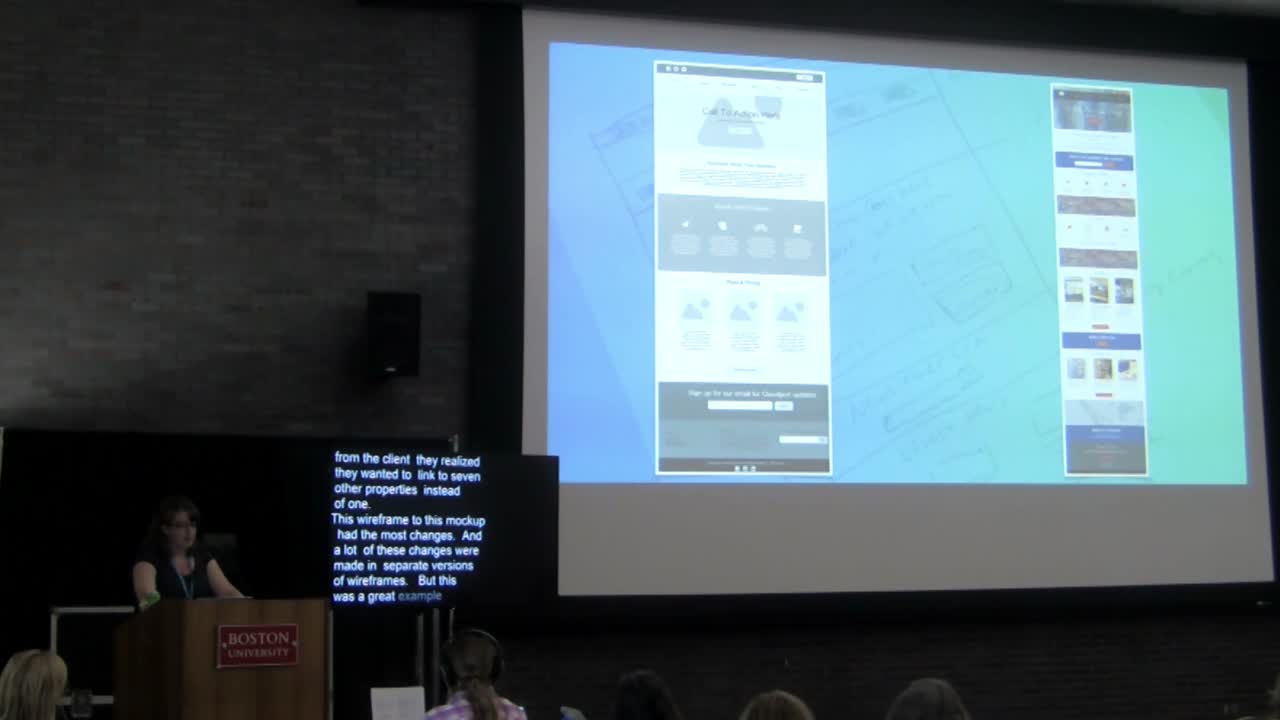
Karalyn Thayer: Introduction to Wireframing
WordCamp Boston 2016Speaker: Karalyn ThayerAugust 14, 2016 — Wireframing is an important first step in creating a website. From creating a napkin sketch to brainstorm ideas, to communicating quickly and effectively with other team members and clients, wireframes are at the foundation of creating a good user experience.
This presentation will be an introduction and overview of wireframing. Where we will go over the following topics:
What are wireframes and the different types
When to use each type of wireframe
How wireframes can help you communicate effectively with clients
The tools used (free and paid) to create wireframes -
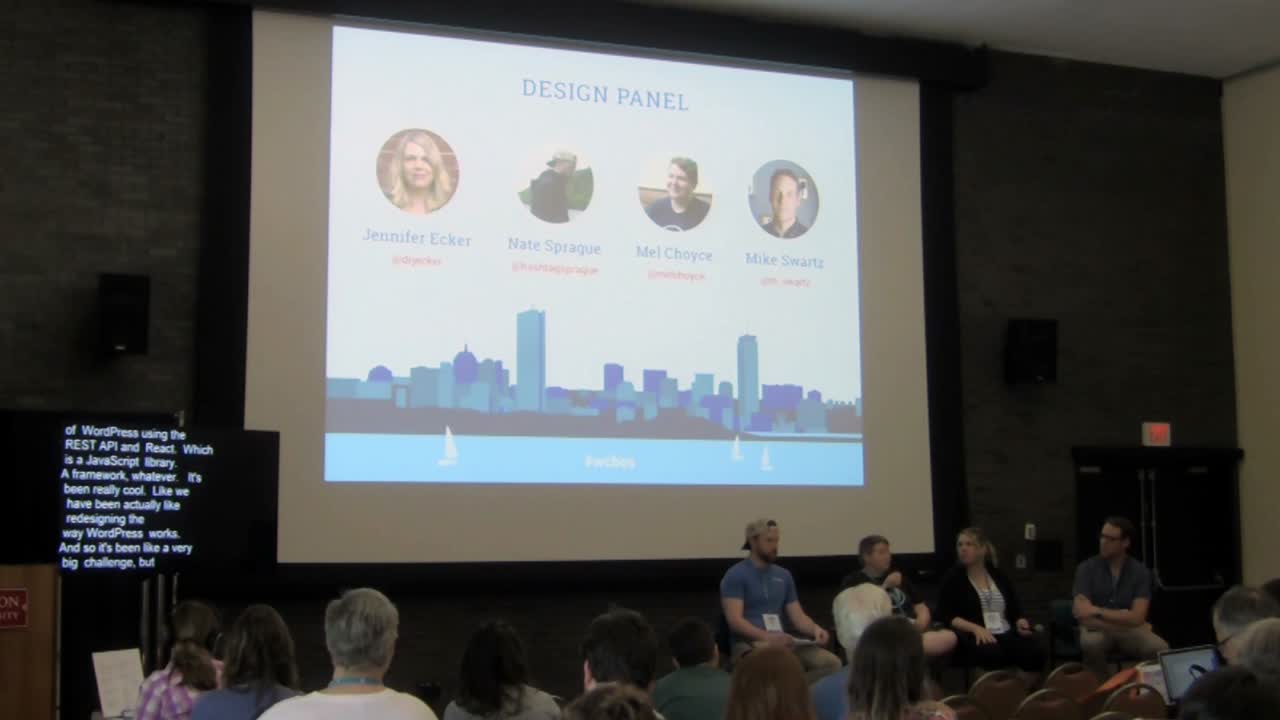
Panel: Design
WordCamp Boston 2016Speakers: Mike Swartz, Nate Sprague, Mel Choyce, Jennifer EckerAugust 14, 2016 — Panel discussion about design.
-
Diane Danielson: Keynote – 2016 Trends in Communication and Design
WordCamp Boston 2016Speaker: Diane DanielsonAugust 9, 2016 — Diane will be doing a deep dive into what makes a powerful brand in 2016 as well as related trends in communications and design that are changing, and will change, the way people perceive and engage with online content. Expect some insights, practical tidbits and a little bit of fun!
-

Takeshi Kashihara: わぷーの3Dモデル作成と3Dプリンタでの出力の挑戦 〜3Dデータの公開とその展望も交えて〜
WordCamp Kansai 2016Speaker: Takeshi KashiharaJuly 29, 2016 — 今年で5歳になるWordPress日本公式キャラクターのわぷー。
今回わぷーの3Dモデルを作成し、3Dプリンタでの出力に挑戦してみました。
すでにその経緯がブログで公開されていますが、
ブログでは語りきれなかったことや、GitHubに公開した3Dデータを使って
どんなことができるのかなどをお話しします。 -

Chris Ford : Designing Your Process (For Fun and Profit)
WordCamp Orange County 2016Speaker: Chris FordJuly 11, 2016 — How to apply the lessons I learned in project management.
-

Michelle Schulp: Beyond Whitespace – Designing for Complex Content
WordCamp Orange County 2016Speaker: Michelle SchulpJuly 11, 2016 — We’re all enamored with the minimalist websites that employ only the most essential use of color, images, and space. But what happens when the volume of information can’t be boiled down to something that simple? We’ll explore how to use design principles to organize and display elaborate user experiences like mega-menus, massive news sites, high-information catalog pages, and multi-level interactions.
-

Tammie Lister: Emotional Interfaces
WordCamp Europe 2016Speaker: Tammie ListerJuly 2, 2016 — Emotional design isn’t just about cute mascots and animated showcases. Real connections happen when you look at even the smallest interaction.
From an impatient button to a eager input field, emotion is a powerful thing we can use to connect to users.
In this talk I’ll explore why emotion is important in every part of the experience and how you can create emotional interfaces.
-

Marko Dugonjić: Art Directed Web Typography
WordCamp Europe 2016Speaker: Marko DugonjicJune 30, 2016 — Having the ability to set legible body copy is an absolute must, and we’ve come a long way with web typography since the dawn of web design. However, it sometimes feels like we have allowed the lack of variety prior to the rise of web fonts to dampen our creativity now that thousands of web fonts are at our disposal. Have usability conventions and the web’s universality steered us away from proper art direction? Have we forgotten about art direction altogether? Let’s look at ways we can push typographic design on the web further, beyond the status quo of today.

An  Opus
Opus
