
Author Archive
-
Hristo Pandjarov: WordPress Is No Good For Really Big Projects? Yeah, Right!
WordCamp Nijmegen 2017Speaker: Hristo PandjarovOctober 15, 2017 — I have often come across this notion that WordPress isn’t ready for big projects by default and that a lot of customization is needed for it to work at a truly large scale. However, my personal experience with setting up and helping maintain several really big projects has made me heartfully disagree with this statement. In this talk I will show you how a truly scalable and redundant system can be created without the need to change anything in WordPress. Here are few of the topics I will cover:
— Multiple Web Nodes
How to properly use load balancers and how to set WordPress on multiple web nodes without making any application modifications.
— Multiple Database Nodes
How to have a redundant master-slave DB replication without WordPress even knowing about it.
— Shared Storage
How to organize your files on multiple nodes, replicate them and keep them in sync in the most efficient way.
— Handling Sessions
How to handle sessions properly and how to overcome other potential issues with huge sites hosted on high-availability, multi-node WordPress setups. -

Pablo Poveda: KISS, Cultura de plugins Buenas prácticas
WordPress Meetup MadridSpeaker: Pablo PovedaOctober 15, 2017 — Conceptos a tener en cuenta para conseguir que tu plugin sea un buen plugin. Hacer las cosas bien no cuesta tanto. Siendo un contexto técnico, utilizaré un lenguaje que pueda llegar a todos los públicos que conozcan WordPress.
-

James Strang: Introduction to Ad Ops
WordCamp Toronto 2017Speaker: James StrangOctober 15, 2017 — Get a quick intro into the online advertising world. Then, get a crash course in putting advertisements on your website. Learn what free plugins are available, and how you can best work with them.
-
Yvette Sonneveld: Voluntourism – How Being A WordCamp Volunteer Gets You Places
WordCamp Nijmegen 2017Speaker: Yvette SonneveldOctober 14, 2017 — • Discover how giving back to the community that helps you pay your bills can also help you travel the world and build connections you never dreamed of;
• Get to know at least 3 ways how voluntourism helps you let go of insecurity and build a healthy sense of self-confidence;
• Take home 4 best practices to make the best of voluntourism. -
Manuela van Prooijen: How To Grow Your WordPress Business By Saying ”No!”
WordCamp Nijmegen 2017Speaker: Manuela van ProoijenOctober 14, 2017 — Many starting WordPress business owners underestimate how long it takes to build a strong foundation for their business. Often, out of desperation, they will take on any job, at any price, no questions asked. Ending up financially and emotionally drained. This is probably a reason why so many businesses close down in their first two years.
Having experienced this myself the hard way, I discovered the power of the tiny word “No!”, the most powerful key we hold to end this rat race.Saying “No!” is counterintuitive. And it is certainly is not an easy thing to do. But practicing to say “No!” can keep you from disliking your business and the people you do business with. The moment you stop saying ‘Yes” to every opportunity that arises, your WordPress business can grow bigger than you could have imagined.
The “No!” strategy is all about doing the work you are passionate about and are good at, and with the right clients. It really boils down to doing less of the work you dislike, isn’t profitable or does not fit your beliefs.
Learn to say “No!”
I feel the time is right to share some insights about why and how I learned to say no to certain work and clients. I will share my six-step process that helped me grow my WordPress business over the years …And remember:
“If it’s not a hell yeah, it’s a no.” -
Alain Schlesser: OOP Plugin Development Basics
WordCamp Nijmegen 2017Speaker: Alain SchlesserOctober 14, 2017 — Building WordPress plugins in an object-oriented way presents some particular challenges, due to the fact that the WordPress APIs you’re coding against are mostly procedural in nature.
In this session, we’ll go over a real-world plugin to see how the code should be structured, and how best to hook into the WordPress lifecycle when you want to take full advantage of the benefits of OOP PHP.
-
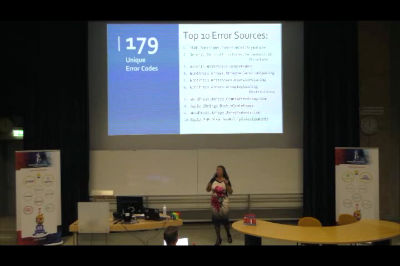
Juliette Reinders Folmer: The Biggest WP Core Patch Ever
WordCamp Nijmegen 2017Speaker: Juliette Reinders FolmerOctober 14, 2017 — If you’re looking at the WordPress core code, you wouldn’t easily believe that WordPress actually has clear and consistent coding standards.
While the standards are in the Core developers handbook, most of the WordPress code base does not comply and patches to fix this were not being accepted.Until now.
So let me tell you a little story about trac ticket 41057 and how we created the biggest patch to go into WordPress core ever. …
-
Laurent Maillard: Stop Selling Websites, Start Selling Value. The Key To Recurring Revenue
WordCamp Nijmegen 2017Speaker: Laurent MaillardOctober 14, 2017 — If you sell a website as the end product, you will always be treated as a commodity where price is the most important element when picking a service provider.
In this talk, I want to share the 5 things every WordPress agency or freelancer should add into their service offering to start selling value to their clients and therefore generate recurring revenue.
I’ve started as a WordPress shop selling 1k € website and have now build a service offering that help me generate around 10k € in recurring revenue every single month.
In this talk I want to share what I’ve learned the hard way and give the audience very actionable ways to start generating more recurring revenue.
-
Thorsten Frommen: Using PSR-7 Middleware In Your RESTful WordPress Projects
WordCamp Nijmegen 2017Speaker: Thorsten FrommenOctober 14, 2017 — In the PHP world in general, there is a standard (recommendation) when it comes to HTTP messages: PSR-7. Despite things like Calypso, Gutenberg and the growing JavaScript codebase in general, WordPress is written in PHP. Thus, wouldn’t it be nice to do what the rest of the PHP world is doing? Isn’t there some way to leverage all the existing PSR-7 middleware and incorporate them into the WordPress REST API? Well, there is.
In this talk, Thorsten will give an overview of the PSR-7 HTTP message interfaces. After that, he will compare these with the structures of WordPress Core, and analyze whether or not they match with the PSR-7 interfaces. Finally, Thorsten will provide a closer look into an example implementation of PSR-7-compliant WordPress REST requests and responses, respectively, and explain their inner workings.
-
Theo van der Zee: Conversie Optimalisatie voor Websites met Weinig Verkeer
WordCamp Nijmegen 2017Speaker: Theo van der ZeeOctober 14, 2017 — Je kunt nu twee kanten op (welke met real-life voorbeelden en bijpassende tools in de presentatie zullen worden uitgewerkt):
1) Niet geadviseerd: zorgen dat je toch kunt gaan A/B testen. Denk hierbij bijvoorbeeld aan het inzetten van SEA of SEO om je aantal conversies per maand te verhogen. Ook kun je denken aan een lagere significantie grens, varianten achter elkaar (in plaats van naast elkaar) neerzetten, grote veranderingen per keer proberen, een focus op micro conversies, etc.
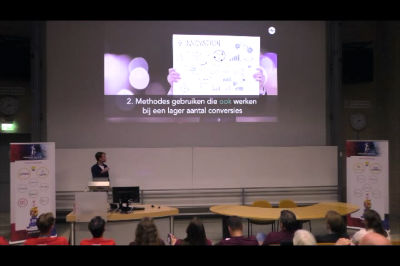
2) Wel geadviseerd: jezelf eerst richten op methodes die ook bij minder verkeer werken. Dit zijn bijvoorbeeld user testing, expert reviews en surveys. Ook je web analytics data of gegevens voortkomende uit mouse tracking of formulier analyse kunnen hier erg inzichtelijk zijn. Hoewel het verzamelen van deze bevindingen niet per se voldoet aan de wetenschappelijke normen, brengen ze vaak wel kritieke pijnpunten aan het licht. Zeker ook door meerdere van deze onderzoekstechnieken te combineren, kun je een redelijk stabiele bron van verbeteringen samenstellen. Overigens is het zo dat ook websites met veel verkeer sowieso vanuit gedegen vooronderzoek hun variaties zou moeten bepalen, waardoor deze methodes bruikbaar blijven wanneer het aantal conversies is gegroeid.

An  Experiment
