
Author Archive
-
Mickey Mellen: Finding The Best Tools To Make Things Happen
WordCamp Atlanta 2016Speaker: Mickey MellenApril 5, 2016 — In this presentation I’ll be sharing all of the tools that we use at GreenMellen to help us keep moving forward. We’ll dig into the products we use, but also into some of their competition so you can decide what works best for you. This will cover areas including organization (such as Asana), communication (such as Slack), files and notes (such as Dropbox), education and reading (such as Feedly), social media (such as Buffer), development (such as ManageWP), SEO (such as Moz) and business (such as Freshbooks).
-

Mathieu Viet: Une gestion alternative des médias
WordCamp Paris 2016Speaker: Mathieu VietApril 5, 2016 — La bibliothèque des médias de WordPress organise les fichiers de type image, son, vidéo, bureautique etc. que vous “attachez” aux articles ou aux pages de votre site. Disponible depuis l’administration de votre site, elle vous permet de stocker vos fichiers multimédias et propose des fonctions simples de retouche d’image.
Aussi, à partir du moment où plusieurs rédacteurs contribuent à votre site, ou que vous permettez aux utilisateurs de transférer des fichiers depuis le front-end de votre site, il est fort probable qu’elle ne parvienne plus à répondre aussi efficacement à vos besoins…
-
Cliff Seal: Introducing WordPress Multitenancy
WordCamp Atlanta 2016Speaker: Cliff SealApril 5, 2016 — Did you know that running multiple instances of WordPress on a single server doesn’t actually require multiple instances of the codebase? In fact, as of WordPress 3.9, you don’t even need multiple instances of a plugin or a theme! Multitenancy can eliminate massive maintenance overhead in the right situations, think server-wide, near-instant updates that let you stay secure without keeping up with multiple sites. And that’s just the beginning of how it can help. In this session, I’ll show you how multitenancy can save time and energy while empowering your users. It’s simple, but powerful.
-

Angelica Yarde: Creating Content Strategies for WordPress
WordCamp Atlanta 2016Speaker: Angelica YardeApril 5, 2016 — In this talk, users of all levels can expect to learn different ways to create content strategies for their WordPress sites and blogs. I will cover several ways to create an editorial calendar. how to generate content ideas, and resources for implementing good content creation practices using tools in WordPress.
-
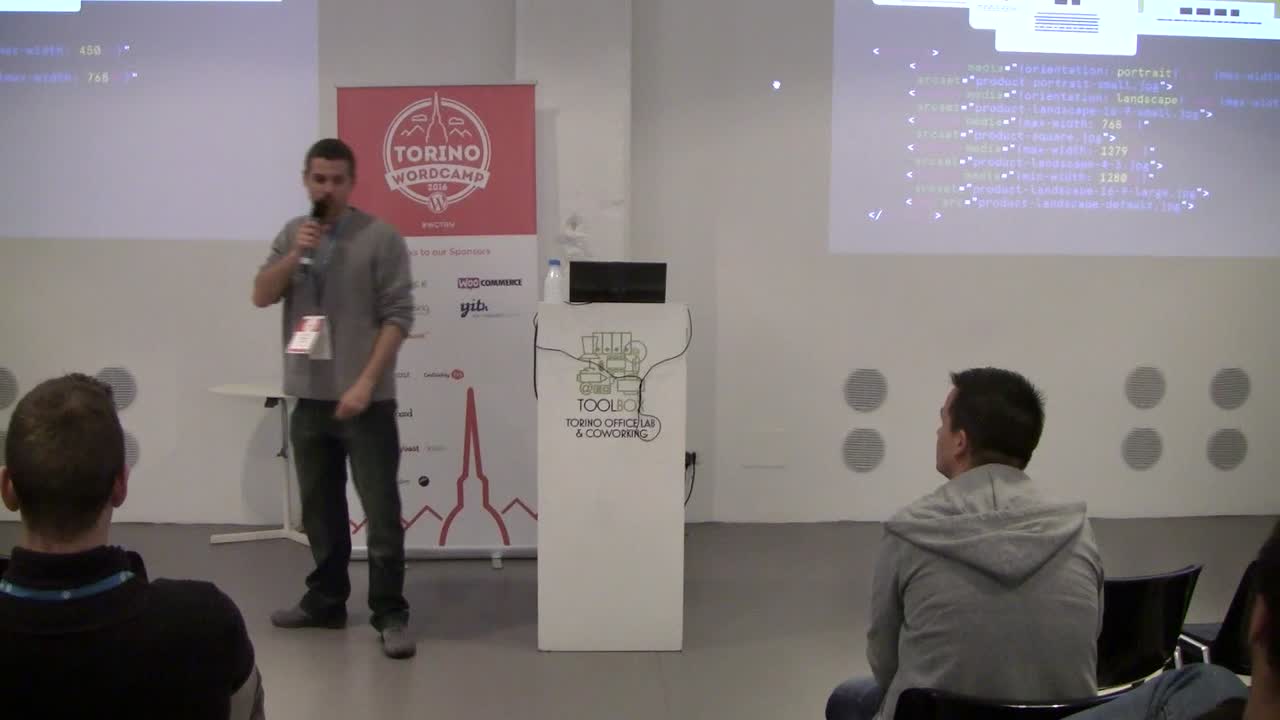
Piero Bellomo: Responsive Images – Beyond max-width: 100%
WordCamp Torino 2016Speaker: Piero BellomoApril 5, 2016 — Through a series of increasingly complex requests from an imaginary, albeit very demanding client, we will review the most effective methods of rendering truly responsive images, and learn how to embed them — right from the start — in your WordPress workflow. You will walk away safe in the knowledge you own all the right tools to achieve bulletproof responsive art-directed seo-friendly lazy-loading images. (phew!)
-

Maria Luisa Raviol: MariaDB – Il database che può migliorare le performance delle tue applicazioni WordPress
WordCamp Torino 2016Speaker: Maria Luisa RaviolApril 5, 2016 — MariaDB è un fork di MySQL il database relazionale, sviluppato da una community sotto licenza GNU GPL che intende mantenerlo come software libero.
Con ottimizzatore avanzato delle performance di MariaDB e le sue specifiche caratteristiche si possono facilmente migliorare le performance della tua applicazione. -

Léon Cros: Comment fonctionnent le projet et la communauté open source Drupal ?
WordCamp Paris 2016Speaker: Léon CrosApril 5, 2016 — Lors du podcast Very French Trip du 30 octobre avec Aurélien Denis, à l’invitation de Grégoire Noyelle, Thierry Pigot et Mathieu Viet, nous avons discuté des différents sujets concernant l’organisation et le fonctionnement de communautés open source WordPress et Drupal. Il semble même que la discussion aurait pu durer toute la nuit, … Il est apparu que nos projets et communautés ont des points communs et des différences qui sont intéressantes à connaître et peuvent être des sources d’inspiration et améliorations croisées.
Cette conférence vous propose d’expliquer comment ça se passe côté Drupal :
modèle économique
passage projets
revue de projets
approche entreprises et gestion des clients
environnemental du software -

Luca Tumedei: The WordPress Way, the Modern Way – Developing As if It Were 2016
WordCamp Torino 2016Speaker: Luca TumedeiApril 5, 2016 — Too often the idea of WordPress as an old and bloated framework and its PHP 5.2 back-compatibility minimum requirement will hide implementation mistakes and a “spaghetti” code approach.
Let’s take responsibility for our code and stop writing it the “old way.”
I will talk about test-driven development, dependency-injection, template engines and other techniques and tools that will allow for modern and efficient code while maintaining PHP 5.2 compatibility. -

Zachary Skaggs: Codeless Contribution – Making WordPress Better as a non-Developer
WordCamp Atlanta 2016Speaker: Zachary SkaggsApril 4, 2016 — In 2014 Matt Mullenweg coined the phrase “Five for the Future” when asking those who make their living on the WordPress platform to give back to the WordPress community in some way by donating 5% of their time to the project. It’s an awesome goal, but can be intimidating and seem out of reach for a majority of WordPress users (especially non-developers). Here we will discuss many ways to leave a positive mark on the future of WordPress without writing a single line of code. From beginner to pro, ANYONE can contribute to WordPress with minimal effort if they know where to look.
-

Jason Coleman: Transitioning From Consulting to Products
WordCamp Atlanta 2016Speaker: Jason ColemanApril 4, 2016 — This talk will be helpful for any WordPress developers or consultants who are thinking of building products of their own. I’ll use our own story as one example of how to do this, with advice that should helpful for businesses and freelancers looking to increase the value of their consulting services, add revenue streams from products, or transition 100% into products like we did.

An  Thingamajig
