
Language: English
-

Rachel Finch: How WordPress Fueled My Community
WordCamp Brighton 2017Speaker: Rachel FinchFebruary 7, 2018 — A talk on 4 ways using WordPress enabled and empowered a community to find each other online, meet offline, share knowledge, raise awareness and win a Sussex Digital Award!
-
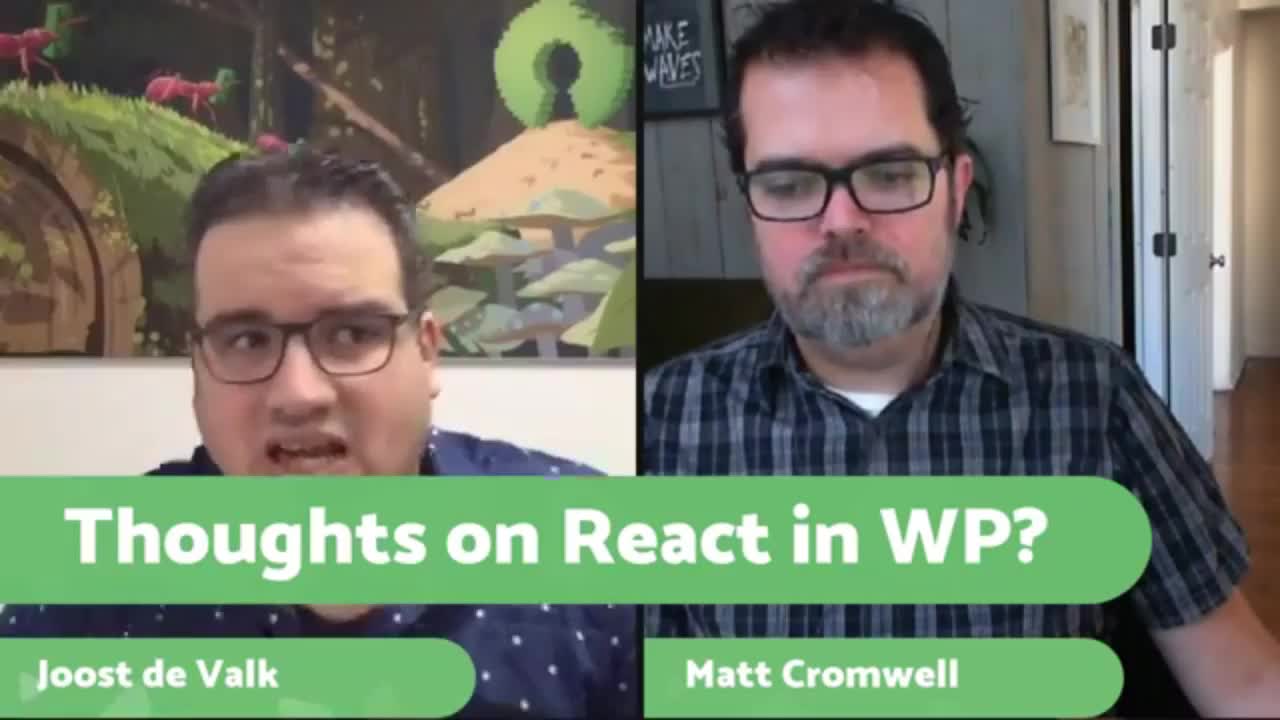
AWP Gutenberg Interview Series with Joost de Valk
AWP Interview SeriesSpeakers: Joost de Valk, Matt CromwellFebruary 6, 2018 — This is the first of FOUR interviews we are doing in February 2018. This series is focused on the upcoming new block-based editor coming to WordPress 5.0, named Gutenberg. In this first interview, we chat with Joost de Valk, founder of Yoast.com about how he and his team are preparing his pluins for Gutenberg. There is a 25 minutes interview, followed by an AMA section from our AWP members.
-
Adam Warner: The Personal and Website Security Mindset
WordCamp Albuquerque 2018Speaker: Adam WarnerFebruary 3, 2018 — Mindfulness – “The quality or state of being conscious or aware of something.” Security can seem intimidating and complex for many, but we shouldn’t (can’t) let that stop us from doing everything we can to secure our WordPress sites and ourselves. After all, our websites are often part of our livelihood. In this session Adam addresses the “big picture” of personal and website security and breaks down the fundamental tasks needed for a strong security plan online. He provides an actionable checklist on what audience members can implement immediately to better secure themselves online in addition to their WordPress websites. After attending this session, audience members will have a better understanding of personal security online and how it affects website security as a whole, as well as steps they can take to mitigate risk in the future.
-
Dustin Hartzler: Starting a Store
WordCamp Albuquerque 2018Speaker: Dustin HartzlerFebruary 3, 2018 — WooCommerce 101
In this fundamentals course, we will be going over how to set up and configure WooCommerce.Topics covered will be:
Why WooCommerce?
How to Install
A walk through the settings
Set up your store and add products
And how to run your store. -

Marianna Siouti: From trading goods to UberEats: Why now it’s the time to focus on eCommerce
WordCamp Athens 2017Speaker: Marianna SioutiFebruary 3, 2018 — This talk is related to Product Strategy and Marketing and can be divided in 3 parts.
1. Why eCommerce?
Presently there are great changes happening on a global & European level that will have a huge impact on eCommerce site development. Can you build an eCommerce website? Good! No matter if you are an experienced developer, an agency or simply a hands-on experience guy now it’s the time to focus on eCommerce website building.
As a research junkie I base my assumption on important pieces of information, stats, facts & figures I have put together, connecting the dots. I will cover:
expected EU policies related to eCommerce
technological exponential growth
consumer behaviour
SMB owner behaviour
eCommerce trends
etc2. Why WooCommerce and open source?
“Imagination is more important than knowledge” Albert Einstein once said, and we find the expression of it in WooCommerce.
WooCommerce is much more than an open source eCommerce plugin! Depending on the country you live in, WooCommerce can be a catalyst for financial independence and personal development. WP & Woo allow anyone who has time and some technical skills to start building websites and get paid for that. Don’t get crazy here, there is room for everyone, experts and beginner developers.
That is because people are more educated with technology nowadays, although you might disagree with that. All these closed source website builders, domain name providers and “newbie” website creators have contributed to that.
Moreover your are not alone, there is an amazing community backing you up.3. Where to focus next:
There are specific elements that you as a developer/ site creator need to focus on when working with WooCommerce, to save time and money.
WOM
Optimised hosting for eCommerce
Organise your workflows & collaboration
Price your maintenance while working with automation -

Alexandra Anghel: Building an E-commerce Progressive Web App with React and WooCommerce
WordCamp Athens 2017Speaker: Alexandra AnghelFebruary 3, 2018 — Progressive Web Apps are becoming the new standard for building amazing experiences on the web. E-commerce businesses all over the world, starting with Alibaba, have already proved that having a PWA will greatly improve conversions and interactions rates. WordPress’s popularity makes it the perfect candidate for powering / sustaining this new wave of web development. The WordPress REST API has opened the door for separating content from UI/UX, allowing us to create engaging apps for the web. It’s up to the community to accept the challenge and steer both WordPress and the web in a “progressive” direction.
-

Carl Alexander: How to Troubleshoot WordPress Performance Issues
WordCamp Halifax 2017Speaker: Carl AlexanderFebruary 3, 2018 — This is what this talk will help you with. We’ll look at the tools that you can use to solve this tricky issue. But we won’t stop there either We’ll also go over how to interpret what these tools are telling you. Because that’s how you’ll get to the root of the issue so that you can fix it.
-

Otto Kekäläinen: Improving WordPress performance with XDebug and PHP profiling
WordCamp Athens 2017Speaker: Otto KekäläinenFebruary 3, 2018 — XDebug is a tool for developers to gain insight into how PHP is executed. Using it for profiling is a very effective, fast and precise method to find bottlenecks in your WordPress site. In this talk I explain how to use it with Webgrind, how to find potential optimization targets, show examples of real cases when XDebug helped fix a performance problem and also explain what XDebug is not suitable for and what can be used instead. If you are not a developer, you’ll learn what XDebug is capable of and when to ask a developer to use it.
-
Kitty Lusby: Getting Traffic
WordCamp Albuquerque 2018Speaker: Kitty LusbyFebruary 3, 2018 — It’s the inconvenient truth that all aspiring bloggers must face – just because you write a great blog post, that doesn’t mean anybody is going to read it. You could pay for traffic through things like Facebook ads and Google Pay Per Click, but is that really a viable solution to increase your readership? If you’re like most bloggers, simply boosting your posts on Facebook probably isn’t the answer. In this session, we’ll talk about how your blog can help you build a large, loyal following of interested readers, and then what to do with those people once they get to your website.
-
Mark Carrara: Google Analytics
WordCamp Albuquerque 2018Speaker: Mark CarraraFebruary 3, 2018 — You can’t fix what you don’t measure. How well is your WordPress site doing? How do you know? Google offers free analytics for all website owners. WordPress has several methods to set this up on our site. We will look at what you need to do to start collecting data, how to interpret what you collect and next steps for your business.

An  Thingamajig
