
Language: English
-
Chris Wurster and Tara Johnson: How to Manage Your Reputation in the Age of Fake News
WordCamp Boston 2017Speakers: Chris Wurster, Tara JohnsonAugust 16, 2017 — In this talk, my attorney (Chris Wurster of Levine-Piro Law in Maynard, MA) and I will touch on brand management and reputation protection, how to avoid/handle fake news, protect yourself and clients against defamation. We will provide actionable take-aways, quick tips and basic guidelines as well as legal action to take, should things get out of hand.
We know that this could get boring in a hurry so we will be illustrating these ideas with real-life, entertaining stories and examples.
-
WordPress Community Interview Wth Tracy Apps
WordPress Community Interview SeriesSpeaker: Tracy AppsAugust 16, 2017 — Tracy Apps is a creative problem solver with over 15 years of client experience in all types of projects. She got her start blogging on B2 and followed that transformation to WordPress. She is active in several local Meetups in the Milwaukee area.
Tracy is the co-owner of http://cornermarket.media which offers a variety of services including design, custom development, branding and training.
She has spoken at several WordCamps about various aspects of design. Some of her presentations can be seen on WordPress.tv.
Tracy and Shelby Elliott are in the process of launching a podcast titled The Not So Straight and Narrow, which will be available on various podcast platforms soon.
-
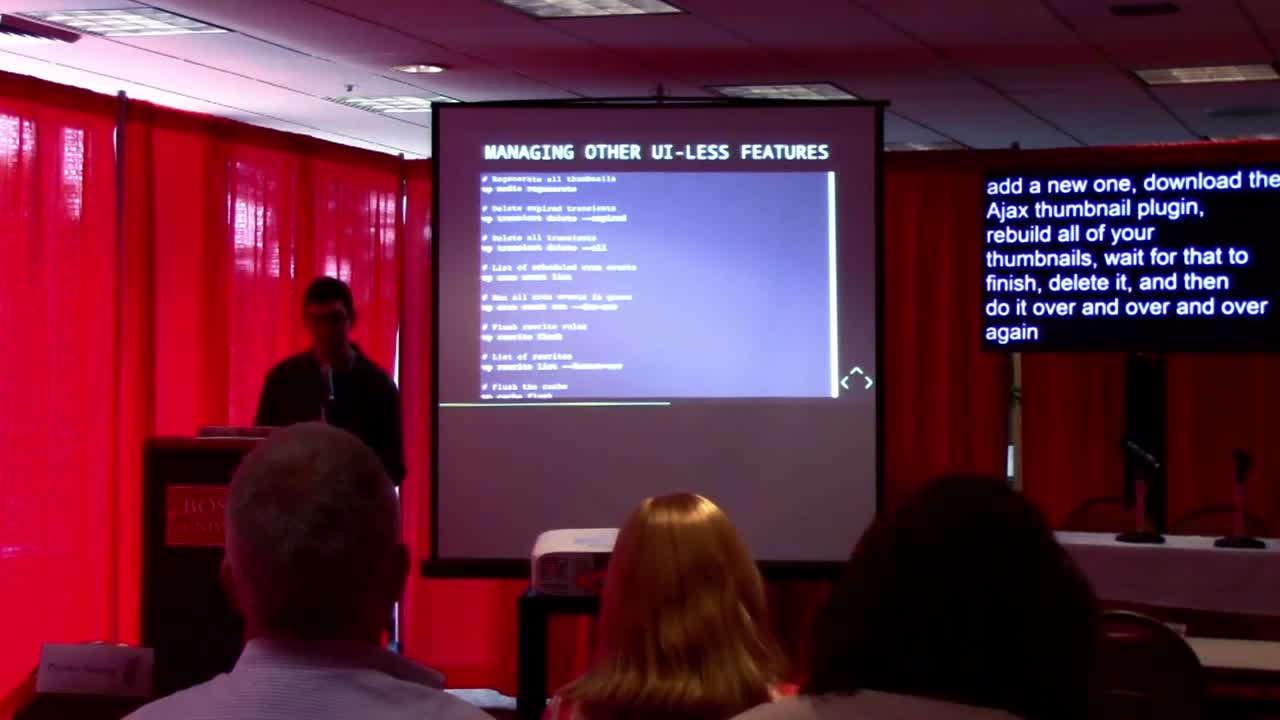
Ryan Kanner: Take Back The Day With WP-CLI
WordCamp Boston 2017Speaker: Ryan KannerAugust 15, 2017 — WP-CLI can be one of the most powerful tools in a developer’s tool belt if used correctly. This tool can be used to automate the simplest or most complex tasks with ease. All from the comfort of your command line.
In this session, I’ll show you a few specific examples where WP-CLI can save you tons of time by performing tedious, or repetitive tasks, and getting you back to the things you want to be doing.
-
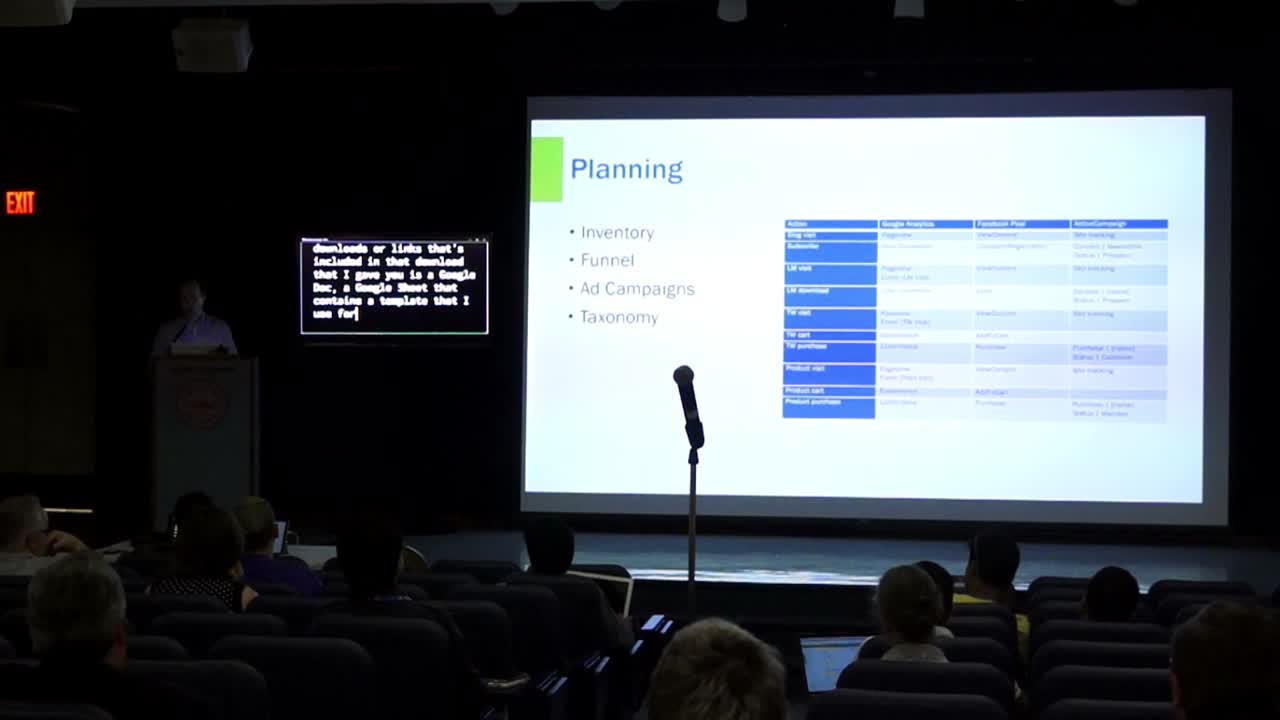
Jon DiPietro: Track Everything With Google Tag Manager
WordCamp Boston 2017Speaker: Jon DiPietroAugust 15, 2017 — Tracking codes. Facebook pixels. Conversion scripts. E-commerce tracking. How can you manage all of this stuff and stay sane?
My answer is, “Google Tag Manager.”
There are many platforms that require you to install code on your website in order to track user behavior and record conversion events. Some of the more common examples include Google Analytics, Google AdWords, Facebook, Twitter, marketing automation solutions, email service providers, call-tracking services, etc. Installing and maintaining all of this code on your WordPress site can quickly become a convoluted headache – especially if you’re not a web development guru.
In this talk, I’ll give an introduction to tracking and conversion codes, provide an overview of GTM’s functionality and its benefits, demonstrate how to install and configure GTM on your WordPress site, and show a few real-world examples. Attendees will also receive a link to download helpful resources.
-
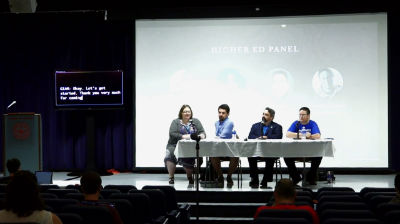
Panel Discussion: WordPress in Higher Education
WordCamp Boston 2017Speakers: Guillaume Molter, Gian Wild, Mike Kirby, Jonathan PerlmanAugust 15, 2017 — WordPress in Higher Education
-
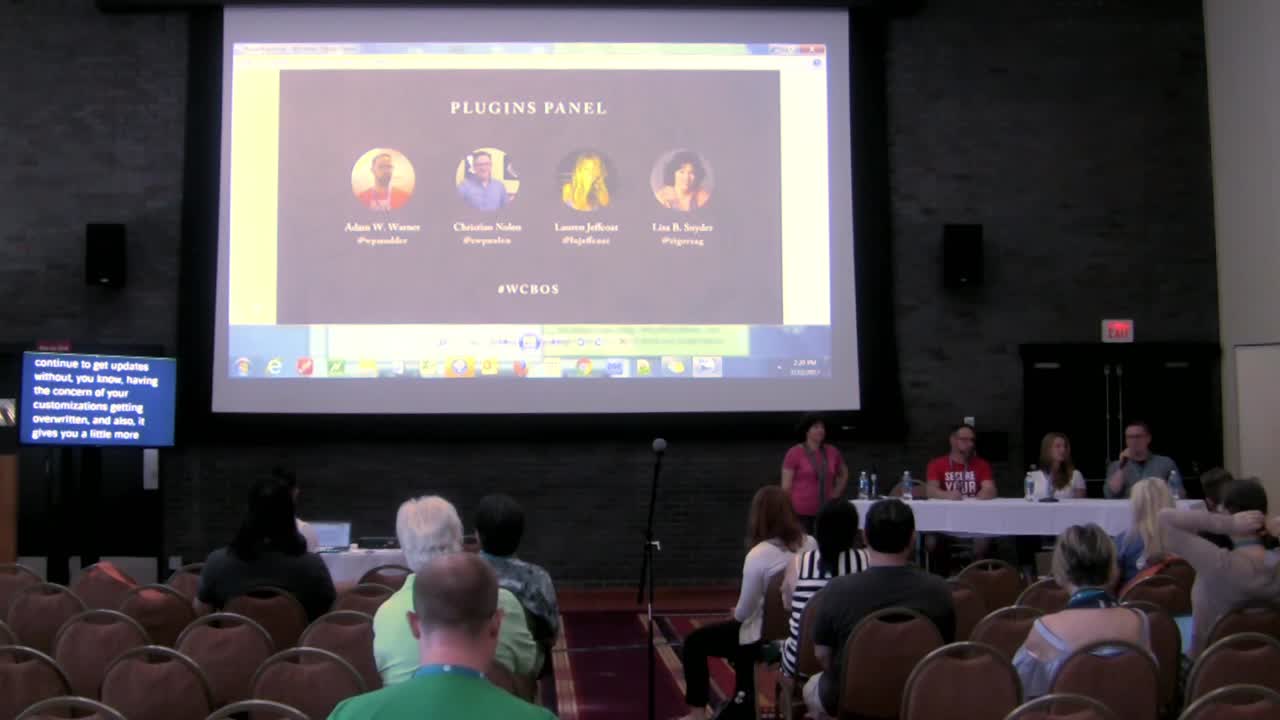
Panel Discussion: Plugins
WordCamp Boston 2017Speakers: Adam W Warner, Christian Nolen, Lisa B Snyder, Lauren JeffcoatAugust 15, 2017 — Using ready-made plugins can make your website more effective and efficient. But do you sometimes find it overwhelming to pick a plugin that is right for your situation?
The panelists will address issues about including new functionality in your project using various plugins.
Questions from the audience are encouraged during the plugin panel session.
Examples:
Are there any “best practice tips” to find right plugins?
Can a site ever have too many plugins?
Are premium plugins always better than free plugins?
What is the best way to get support for a plugin?
What happens to a site when an installed plugin is deactivated?
Can the code be changed in plugin files without breaking it? -
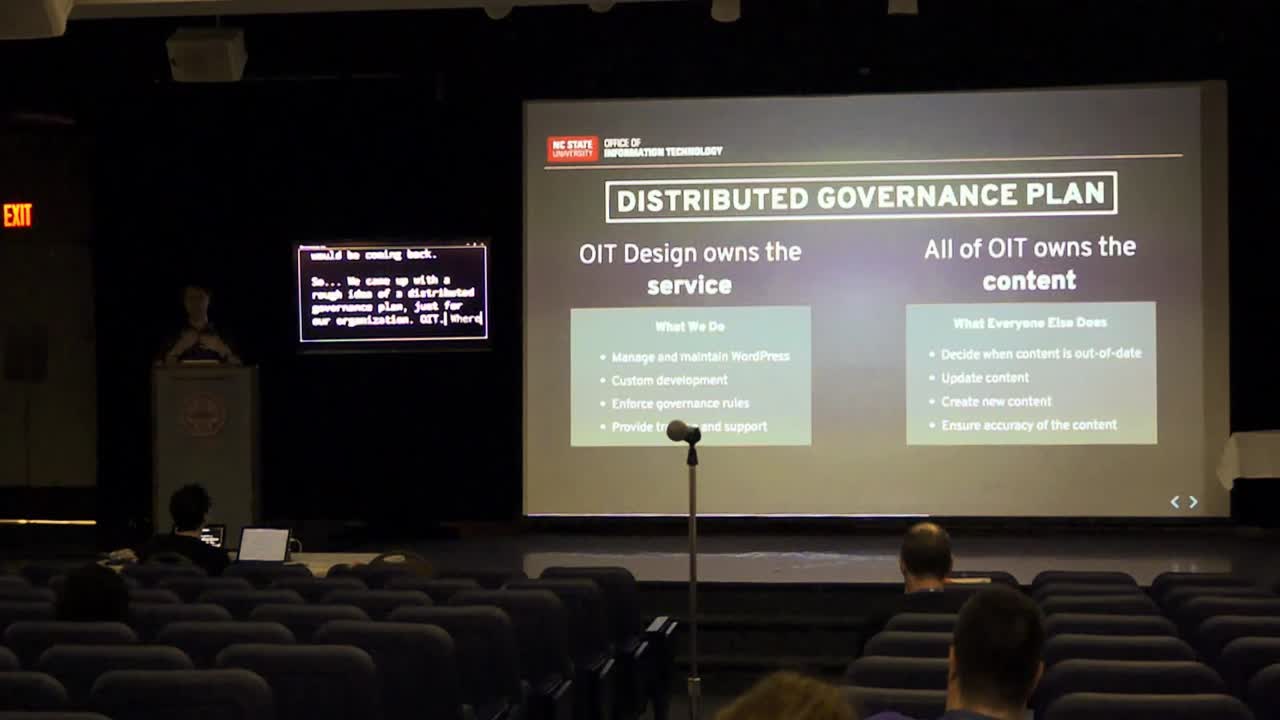
Brian DeConinck: Mobilizing 300 Reluctant Content Creators
WordCamp Boston 2017Speaker: Brian DeConinckAugust 15, 2017 — NC State’s central IT office employs almost 300 people, whose areas of expertise range from high-performance computing to video production to installing fiber optic cable. By tradition and budgetary necessity, every single one of them has content creation and editing privileges on our unit website, oit.ncsu.edu. After years of a content free-for-all, the result wasn’t pretty: 2,500 pages total, with lots of out-of-date information, duplication, broken navigation, and accessibility issues everywhere.
In this session, we discuss how we stepped back from the brink, took control of our content, and—with a few homegrown WordPress plugins and help from the higher ed community—taught our 300-person content team how to build and maintain a good website.
-
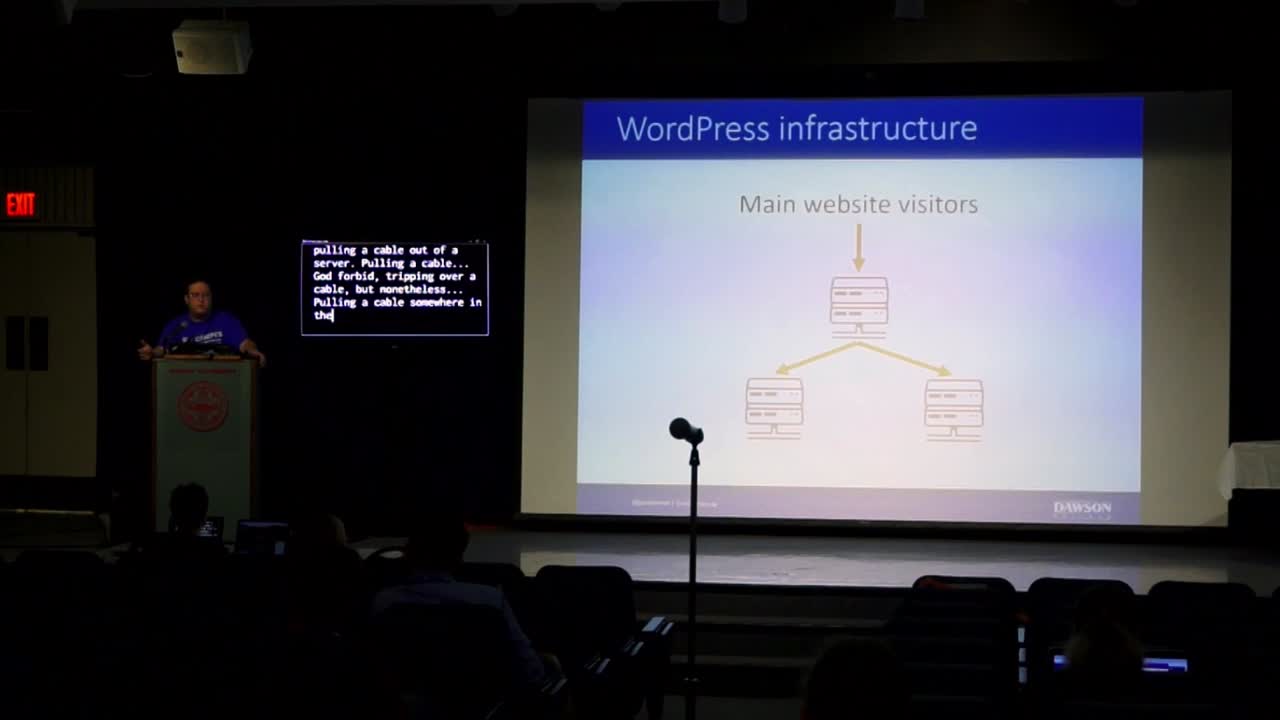
Jonathan Perlman: The Dawson Way of Doing Things
WordCamp Boston 2017Speaker: Jonathan PerlmanAugust 15, 2017 — Dawson College, in Montreal, Quebec, Canada with 10,000+ students and 1,000+ faculty and staff has adopted WordPress as our primary web publishing platform. We’ve mostly had success, but we’ve also had our share of failures and growing pains. In this case study, I’m going to talk about how we started out with WordPress in 2010, migrated our main website a few years later to a multi-site install and how it all evolved to what we have today. Since then, we’ve adopted the “lean and mean” mantra to building sites, while making them easy to update. This case study will showcase the front and back-ends of our higher profile sites to show how we achieved our goals. We’ll also explain how we manage expectations, do our development, choose plugins and tools, and which themes we’ve come to rely on.
-
Mike Kirby: Winning Hearts and Minds – Effective Communication Throughout A Website Redesign
WordCamp Boston 2017Speaker: Mike KirbyAugust 15, 2017 — In 2014, The University of Maine determined that umaine.edu needed to be taken to the next level. A year later, a robust new website was launched to coincide with the incoming class and our 150th year celebrations. This session details the journey between these two points, and how we avoided common pitfalls in website redesign projects affecting hundreds of content contributors and their individual websites.
-
Bill Gadless: Why “Focus” Might Be the Most Important Ingredient to Growing Your Agency
WordCamp Boston 2017Speaker: Bill GadlessAugust 15, 2017 — In HBO’s documentary “Becoming Warren Buffett”, there’s a scene where Buffett and Bill Gates were both asked to write down on a piece of paper the one thing that they each felt contributed most to their success. Surely enough, Buffett and Gates had written the same word down on their respective papers: Focus.
Now, when I talk about “focus”, I don’t claim to know how to avoid multitasking or how to ignore distractions like social media, news, politics and other noise that gets in the way of productivity. I could use a lot of help there.
But what I’ve done successfully and what I will discuss is how to focus your business.
As far as I know, they don’t teach a lot of this stuff in college. (I can’t be 100% certain, as I didn’t spend much time there before dropping out). I spent the first 10 years of emagine’s history kind of flailing – trying to be everything to everyone, anything to anyone. I managed and did fine, but only once I started to focus did the business take a significant turn for the better.
I will cover the importance of (and how to) focus on:
Your strengths
Your core markets/industries
A core technology/platform (presumedly WordPress)
The clients you already have who help – not hurt – your business
The types of projects that are profitable for you (stay within your wheelhouse)
The path to achieving your goals (without getting distracted by day-to-day challenges)
Working with the right People
Working on your business, not in your business
Your life. Health. Relationships
Your numbers
Your differentiating value
Your long-range vision
Sounds like a lot I know. And it is.But it’s really not that hard. And once you can confidently say that you’re laser-focused on everything I’ve outlined here, trust me when I tell you that you’ll have dramatically improved your business, your earnings and your lifestyle.

An  Ruckus
