
Language: English
-

Mika Epstein: Why Can’t I Do X in my plugin?
WordCamp Boston 2017Speaker: Mika EpsteinAugust 9, 2017 — Have you ever wondered WHY you can’t do some things in plugins? Why we don’t let you use your own jQuery or call wp-load or offload images? I’ll tell you the real reasons why your plugins get flagged for fixes beyond the obvious like….
* Call my own jquery
* Call wp-load directly
* Offload images
* Put Google Analytics on the Backend of my plugin/theme
* Use FancyBox 2.x
* Name My Plugin X….This talk will be CODE LITE, so if you’re working on your first plugin or want to get started, this can be for you!
-

Discussion Panel : Working in the Open (Source)
WordCamp Boston 2017Speakers: Dwayne McDaniel, Jared Novack, Mel Choyce, Steven WordAugust 8, 2017 — A panel discussion with leaders and contributors in the WordPress project, and other open source project owners. How do you get started contributing to open source software, like WordPress? How have your contributions to open source helped you?
-

Steven Word: Enterprise-Grade WordPress Development – Building Bulletproof Software That Is Ready for the Masses
WordCamp Boston 2017Speaker: Steven WordAugust 8, 2017 — What distinguishes good WordPress development from great WordPress development? What tools can I use to improve my development process? How do I make my code extensible for future adopters? Why should I bother with following the coding standards and best practices? Will my software scale? How can I ensure my code will perform in the wild?
This crash course session will dive head-first into answering these questions as we explore the development practices of professional WordPress developers. Through exposure to tooling and popular development workflows, you will become familiar with the best practices from the industry. Geared towards creators of all skill levels, this session will help you build confidence when developing with the web’s most popular content management system.
-

Scott Buscemi : Inbound Marketing: Beyond the Newsletter Signup Form
WordCamp Orange County 2017Speaker: Scott BuscemiAugust 8, 2017 — You’ve set up your site and popped in a newsletter signup form on the sidebar… now what?
In this session, you’ll learn techniques that you can immediately apply to your site that’ll turn it into a marketing automation machine! Understand your visitors, boost up your SEO, and heat up those conversion rates.
-
Kelli Wise: There Are No Dumb Questions – Beginner QandA
WordCamp Seattle 2016Speaker: Kelli WiseAugust 7, 2017 — ” .. every question is a cry to understand the world. There is no such thing as a dumb question” – Carl Sagan
Have a question that hasn’t been answered by one of the presenters today? Or maybe a discussion with one of your new WordPress friends has sparked your curiosity? This is your chance to get answers, explanations, or just a good laugh
-
Catherine Bridge: Common Desk Job Postural Alignment and What You Can Do About It!
WordCamp Seattle 2016Speaker: Catherine BridgeAugust 7, 2017 — New research indicates that sitting 8 hours a day may be as hazardous to your health as smoking!
Web developers and other desk-jobbers frequently suffer from postural ailments such as Hyperkyphosis (hunch back) and Anterior Pelvic Tilt, which can cause pain, and eventually lead to injuries such as ruptured disks or sciatica.
This talk will be broken into three main sections.
Lecture: The woes of desk jobs, a brief outline of Hyperkyphosis and Anterior Pelvic Tilt and what can be done to combat them. This will focus on body positivity and not what is “normal” vs “abnormal” but what causes YOU the individual, discomfort and how to alleviate pain.
Questions: 5 minutes
Zumba Class: That’s right! I am going to lead whomever-shows-up in a beginner friendly, booty shaking, smile inducing physical break from *sitting all day at WordCamp!* -
Tammy Finch: Managing Your Online Reputation
WordCamp Seattle 2016Speaker: Tammy FinchAugust 7, 2017 — Word-of-mouth advertising – and a good reputation among customers – is still your most valuable marketing and public relations asset in the digital age. On the Internet, a positive reputation can take you farther than ever… and a few bad reviews can sink your sales overnight.
In this short workshop, experienced online marketing coach Tammy Finch is going to show you:
How to monitor reviews and respond to negative feedback
How to manage (and separate) your personal and professional personas
How to use social media profiles and other digital tools to get feedback from buyers
This should be considered a must-attend session for any marketer or business owner. -

Morgan Kay: Drawing With SVG
WordCamp Seattle 2016Speaker: Morgan KayAugust 7, 2017 — SVG (scalable vector graphics) can be a really powerful tool for creating dynamic content on your website. In this talk, I will show you how to make responsive animations with HTML and JavaScript, using rickriordan.com as a case study.
-
Jeremy Felt: Getting To Know WordPress Multisite
WordCamp Seattle 2016Speaker: Jeremy FeltAugust 7, 2017 — Multisite is often treated as a dark corner of WordPress and can be forgotten or managed poorly when developing public plugins or working on client projects.
Let’s pull back the curtain and shed some light.
We’ll cover a brief history of multisite to give context to some of the early decisions. We’ll walk through the structure and load process to show how straightforward multisite really is. We’ll go through the brand new WP_Site_Query and WP_Network_Query class introduced in WordPress 4.6. And we’ll cover some common solutions to things people frequently want to do with multisite.
-
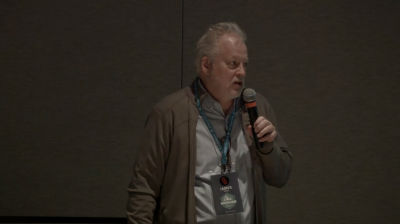
James Hipkin: Profitable Website Development – The Oreo Cookie Strategy
WordCamp Seattle 2016Speaker: James HipkinAugust 7, 2017 — Red8 Interactive builds custom WordPress themes for design agencies across the country. Several of our customers have told us that they are no longer designing websites because they can’t make money on the projects. In fact they frequently lose money. The presentation is a reaction to this. It’s based on our experiences and presents an approach that will lead to profitable projects. With a few changes to their process a website project can be profitable. But it does require change.

An  Production
