
Language: English
-

Kshitij Patil: How To Sell Web Design Skills To Average Indian Businesses
WordCamp Mumbai 2016Speaker: Kshitij PatilJune 30, 2017 — Web designing skills are easier to learn than to sell, is what one could say. A lot of people struggle to sell their skills. Learn from insights Kshitij will offer about how to sell your web designing skills in the Indian context.
-

Nirav Mehta: Build And They Won’t Come – WP Plugin Marketing Tips
WordCamp Mumbai 2016Speaker: Nirav MehtaJune 30, 2017 — WordPress has more than 50,000 public plugins. Should you build the next one? Will it be worthwhile maintaining it over the next five years? How will people discover your plugin? What activities can suck you away from building great plugins? How do you land up with great reviews for your plugins? Does it make sense to listen to customer feedback? How do you run a business around WordPress plugins and make money?
-

Nuno Morgadinho: Ideas for Customer Support Success
WordCamp Sevilla 2016Speaker: Nuno MorgadinhoJune 30, 2017 — How to organize your business to provide the best level of support for clients? How can your support become an asset for you rather than a liability? How can you train people to provide good support and have them engaged in the work? Why support is such an hassle for engineers and designers?
-

Aki Björklund: Finding Meaning In Abstract Work – A Personal Story
WordCamp Helsinki 2017Speaker: Aki BjörklundJune 29, 2017 — Working with abstract things like the web can sometimes be demotivating. Remote work with no colleagues to talk to can make matters even worse. I’ve always considered myself a developer, but over the years I’ve also been a consultant, an agency founder/CEO and now a team leader. Even though I love development, with different roles and different clients and projects it sometimes has been a struggle to find motivation to continuously do my best. I will share what I have learned how to cope with the pressure, focus on stuff that matters, and finding meaning and motivation in my work.
-

Thomas Hurd: The User Experience Perspective Of Multilingual And Multi-regional Websites
WordCamp Helsinki 2017Speaker: Thomas HurdJune 29, 2017 — Finland is one of few countries where website developers, more often that not, need to create multilingual websites. But what about multi-regional websites and what about the end user’s experience?
User experience and effective content are two aspects that keep users returning, yet these are oftentimes overlooked by both clients and developers.
This talk would venture into strategies for planning and building successful multilingual and/or multi-regional websites that maximise content and the end user experience, ultimately encouraging your clients’ customers to stay and explore their website.
-

Onni Hakala: Why It’s Dangerous To Turn Off Automatic Updates And Here’s How To Do It
WordCamp Helsinki 2017Speaker: Onni HakalaJune 29, 2017 — This talk is about automatic updates of WordPress. They are brilliant for security and as far as I know core updates are really well tested and they don’t introduce breaking changes.
For plugins and themes it’s quite different story. Many of them are abandoned or completely changed over the years. This is the breaking point for so many users and inexperienced developers and they will just disable the updates. They are scared of breaking their sites just as we were. But if the updates are turned off the sites will get heavily exploited. So what should we do?
This is our story of how we disabled all automatic updates last year. Why we did it and the struggle we had. In the end we learned a few things about testing, automation and security.
We will visit topics like package management with composer, integration testing and continuous integration.
-

Danny Hobo: Speeding Up Development With WP-CLI
WordCamp Helsinki 2017Speaker: Danny HoboJune 29, 2017 — WP-CLI, a tool not too familiar by many developers, and that is a shame. WP-CLI can speed up your development and maintenance time a lot by just typing a few commands in the terminal.
-

Petya Raykovska: Prepare Your Non-devs For A REST API Project
WordCamp Helsinki 2017Speaker: Petya RaykovskaJune 29, 2017 — There is a hype surrounding the WordPress REST API these days. People focus on how it will change the future of WordPress, allow developers to expand the range of projects they can build, make WordPress popular outside its own bubble.
What we rarely talk about are the challenges presented by the REST API especially for non developers. This talk focuses on them and gives you a checklist to make sure both your clients and your non-developers know what to expect from a REST API project.
-
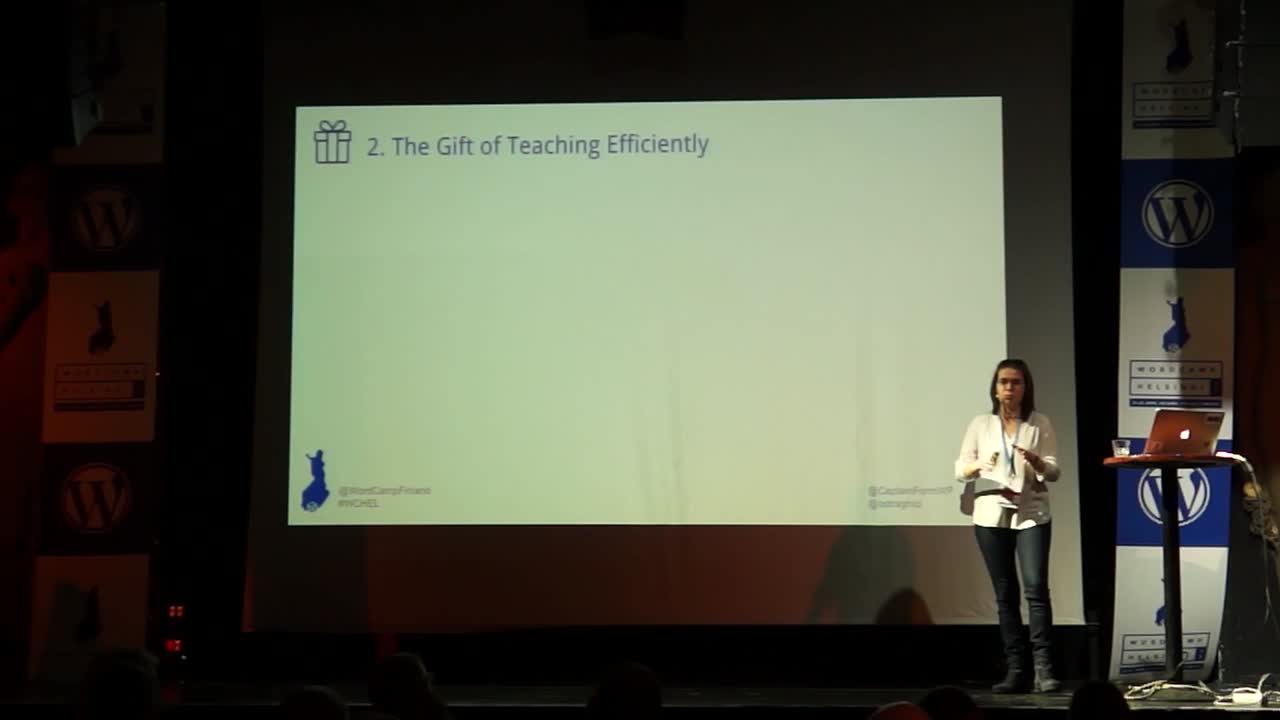
Alexandra Draghici: 3 Gifts My Users Gave Me
WordCamp Helsinki 2017Speaker: Alexandra DraghiciJune 29, 2017 — “I thought a user-centered approach was going to benefit the users of my product. And then I realized how much users have given me back in the process. This presentation focuses on three ways in which users have made my life better, by giving me (at least) three gifts:
– The gift of building solid roadmaps
– The gift of teaching efficiently
– The gift of working in a happy team” -

Edmund Turbin: Configuration Management In WordPress
WordCamp Helsinki 2017Speaker: Edmund TurbinJune 29, 2017 — Moving data between environments in a tiered development workflow can be tricky and time consuming. It’s important to have content, options, settings and files synchronized across your tiers to ensure a stress-free development process. Understand how data is stored in WordPress and explore several different approaches to moving WordPress seamlessly from server to server for deployment.

An  Brainchild
