
Speakers: Simon Kraft
-

Security in the age of AI – Discussion Panel
WordCamp Gdynia 2025Speakers: Stanislav Polyakov, Rashmi Nagpal, Simon Kraft, Tim NashOctober 1, 2025 — This panel brings together security experts to discuss how AI is changing the game for WordPress site protection – both the new risks we’re facing and the smart ways to defend against them. You’ll hear real-world insights on keeping your WordPress sites secure while making the most of AI tools that are becoming part of everyday web development.
-

The Shape of Things to Come – The Cyber Resilience Act and Open Source Development
WordCamp Gdynia 2025Speaker: Simon KraftSeptember 30, 2025 — Starting in 2026, parts of the Cyber Resilience Act (CRA) are going into effect. There are some things to prepare for developers and maintainers of open source software like WordPress plugins. This session will give you a primer on the key points of CRA, and equip you with the knowledge (and a handy checklist) to navigate the uncertain waters of European regulations.
-

Planet WP – Ein Blick in die deutsche WordPress-Seele
WordCamp Karlsruhe 2024Speaker: Simon KraftOctober 12, 2024 — In knapp 2.000.000 deutschsprachigen WordPress-Websites findet er sich und doch dürfte er den Wenigsten ein Begriff sein: der deutsche Planet-Feed.
Die WordPress-Community sammelt Feeds von Blogs rund um WordPress um sie über den zentralen Planet-Feed auszuspielen und wichtige oder relevante Beiträge möglichst vielen Menschen zugänglich zu machen. Doch die Aktivität im Planet-Feed hat in den letzten Jahren nachgelassen.Wie können wir neue Content Creator für den Feed und für WordPress gewinnen und welche Chancen ergeben sich durch eine Aufnahme im Planet?
-

Making connections: the joy of organizing the local Community
WordCamp Finland 2023Speaker: Simon KraftAugust 11, 2024 — At a WordCamp in 2011, Simon got in touch with other WordPress people for the first time. He started his first local Meetup one year later and has never stopped. Now, ten years later, after more than 150 facilitated in-person, online, and hybrid events, Simon looks back on one of the most rewarding and enjoyable hobbies he could have wished for.
Now he combined his own experiences with the shared knowledge and tricks of meetup organizers worldwide. This talk aims to help anyone interested in starting local meetups, revitalizing dormant groups, and building strong and sustainable local communities. -
Greener, Better, Faster, Stronger – Wie Websites umweltfreundlicher und zuverlässiger werden
WordCamp Leipzig 2024Speaker: Simon KraftApril 21, 2024 — Jede Website verursacht CO₂ Emissionen, wenn sie aufgerufen wird. Wie hoch die Emissionen sind, hängt von verschiedenen Faktoren ab. Egal ob wir eine Website selbst gebaut haben, oder nur betreuen. Ob sie mit einem Pagebuilder, dem Classic-Editor oder einem Block-Theme gebaut wurde. In den meisten Fällen gibt es mögliche Anpassungen, die den CO₂-Ausstoß reduzieren und WordPress ganz nebenbei auch stabiler, zuverlässiger und leistungsfähiger machen.
-
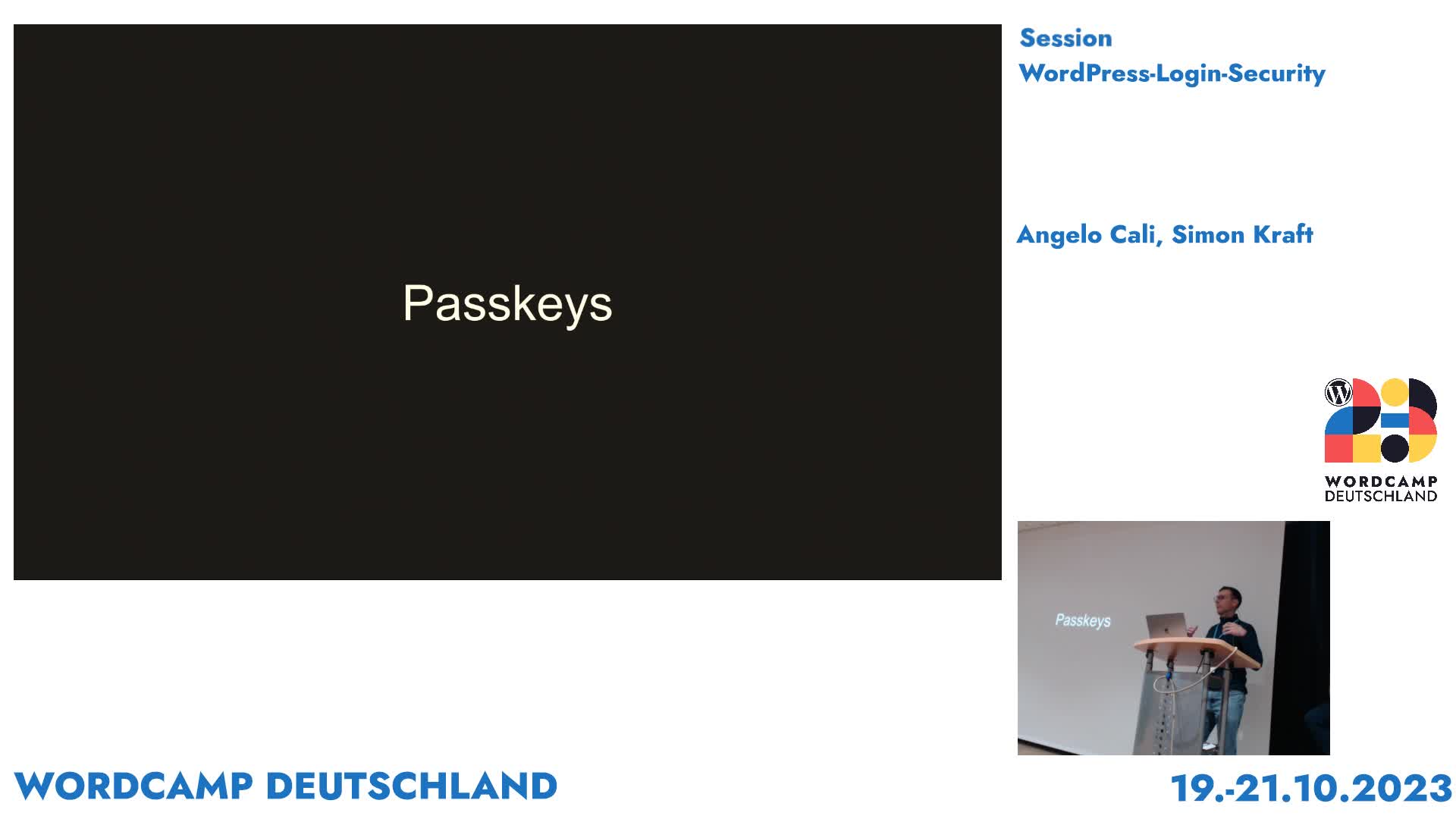
WordPress-Login-Security
WordCamp Germany 2023Speakers: Angelo Cali, Simon KraftOctober 21, 2023 — Der Login-Bereich von WordPress ist aus Sicht der Sicherheit eine Schwachstelle. Alles und Jeder mit einer groben Vorstellung von Benutzername und/oder Passwort kommt von hier aus an Admin-Rechte, kann grundlegende Änderungen an Plugins, Aussehen und Inhalt einer Website vornehmen.
Mit welchen Maßnahmen der Login abgesichert werden kann, schauen wir uns in diesem Vortrag an. -
Making connections
WordCamp Italia 2022Speaker: Simon KraftDecember 18, 2022 — At a 2011 WordCamp, Simon connected with other WordPress people for the first time. He started his local Meetup one year later. Now ten years later, after leading more than 150 in-person, online, and hybrid events, Simon looks back on one of the most rewarding and enjoyable hobbies he could have wished for.
In this session, Simon combines his own experience with the shared knowledge of Meetup organizers worldwide. This talk offers guidance to anyone interested in starting local Meetups, revitalizing dormant groups, or building sustainable local communities.
-

Simon Kraft, Flavia Bernárdez, Ronald Gijsel, Erika Ellacott, Ana Garcia López, Laura Sacco: Building a Sustainable Community through Meetups
WordCamp Europe 2022Speakers: Simon Kraft, Ronald Gijsel, Erika Ellacott, Ana García López, Laura Sacco, Flavia BernárdezJuly 21, 2022 — Join us for a panel discussion with community organizers from the WordPress ecosystem.
You’ll hear firsthand experiences from meetup and event organizers about what it’s like to start a meetup program and build a community through in-person and virtual events.
They’ll talk about the struggles they’ve faced, what they’ve learned from them, and share advice for anyone interested in getting involved, whether that means joining a meetup or even launching one yourself.
-

WordPress for the future
WordCamp Glasgow 2020Speaker: Simon KraftApril 22, 2020 — Every time, you load a website — even this one — a certain amount of carbon is emitted to the atmosphere. These emissions are tied to the amount of energy consumed in the process of delivering the websites content to your browser.
Let’s explore options for both, reducing your own websites greenhouse gas emissions and helping others to do the same by making a third of the web smarter, leaner and more efficient. -


An  Brainchild
