
Language: English
-

Kevin Fodness : Beyond the Metabox – How Gutenberg Can Bring the Editorial Experience to Life
WordCamp Publishers: Columbus 2019Speaker: Kevin FodnessJune 2, 2020 — The pre-Gutenberg editorial experience in WordPress leaves much to be desired. There is the ostensibly what-you-see-is-what-you-get content editor that is invariably augmented with meta-boxes to collect additional information about how the post should be displayed, including content that appears above or below the post body, or in a sidebar, or inserted into the post’s metadata. There are two primary problems with this approach—it is necessarily non-visual, and relies heavily on using post previews to understand what the published post will look like; and it is rigid, because PHP templates control what appears where outside of the free-form content editor. Gutenberg, properly utilized, solves both of these problems by bringing content into the primary editor flow as blocks which can be fully visualized and re-ordered, allowing content editors to see and understand what a post will look like and how it will behave before publishing, without needing to continually refresh a post preview.
This talk discussed how developers can support content editors and publishers by moving away from meta-boxes to custom blocks and post-level metadata. I explained how to think Gutenberg-first during design and development, and showcased examples of these approaches in practice.
-
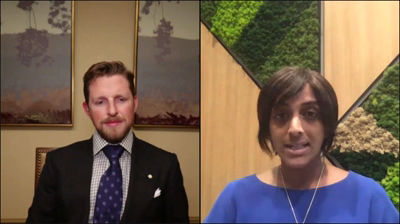
Matt Mullenweg, Monisha Varadan: Fireside Chat with Matt Mullenweg
Livestream 2020-Feb-22Speakers: Matt Mullenweg, Monisha VaradanJune 1, 2020 — Monisha Varadan interviews Matt Mullenweg in an open discussion around WordPress, Gutenberg, Distributed Work, and more!
-

Imran Sayed: Fastest way of creating Gutenberg blocks with minimal JavaScript knowledge
Livestream 2020-Feb-22Speaker: Imran SayedJune 1, 2020 — In this talk, Imran Sayed discusses how a PHP developer, with minimal JS knowledge, can build blocks quickly. You will learn about his personal experiences that helped him build blocks quickly and allowed clients to migrate to WordPress site, with the power of Gutenberg.
-

Saif Hassan: Why Human Centric Design is Important for WordPress & the Community
Livestream 2020-Feb-22Speaker: Saif HassanJune 1, 2020 — Md Saif Hassan provides a very beginner-friendly session on human-computer interaction that quickly covers the basics of HCI including affordances, signifiers, constraints, mappings, feedback. After covering the basics, Saif shows some examples of thoughtful design and how people can integrate these concepts to make better designs.
-

Nirav Mehta: You can be on this stage too – public speaking and storytelling at WordCamps and beyond
Livestream 2020-Feb-22Speaker: Nirav MehtaJune 1, 2020 — Effective public speaking is actually a mandatory life skill! So let’s deal with your toughest questions head on in this session. You won’t become a naturally charismatic on-stage master at the end of these 30 minutes. But you will certainly break through your biggest fears and be ready to get on stage!
-

Muhammad Muhsin: Using WordPress with GraphQL
Livestream 2020-Feb-22Speaker: Muhammad MuhsinJune 1, 2020 — Say hello to WPGraphQL – an open-source WordPress plugin that allows you to use this modern technology to fetch your WordPress posts, pages and more. I will talk more about this cool new technology and give you tips on how to use it to help power your decoupled or standard website.
-

Francesca Marano, Umar Draz: Building a WordPress community
Livestream 2020-Feb-22Speakers: Francesca Marano, Umar DrazJune 1, 2020 — A two-person panel, featuring Francesca Marano and Umar Draz, discussing how to start and maintain a healthy, local community. Some of the questions covered:
– Why did they start the community?
– What issues did they faced (and are they still facing)?
– What advice would they give to others that are thinking about starting a local community? -

Chris Edwards: Google Analytics Workshop
WordCamp Birmingham 2019Speaker: Chris EdwardsJune 1, 2020 — Everybody knows Google Analytics is the best way to track traffic to your WordPress website. But setting up Google Analytics correctly and understanding all the information they provide can be a challenge. In this session, Chris Edwards will do a deep dive into Google Analytics.
We’ll cover:
Basic installation on WordPress Website
Audience reports
Acquisition reports
Behavior reports
Filters & Segments
Event Tracking
Setting up Goals & Goal Tracking
UTMs
Setting up Custom Dimensions
Overview of Google Data Studio
List of recommended plugins -

Lindsay Halsey: SEO Workshop
WordCamp Birmingham 2019Speaker: Lindsay HalseyJune 1, 2020 — Learn how to invest 2 hours into SEO and have a positive impact on search engine results.
We’ll start with the basics – the anatomy of a search engine results page and keyword research.
Then, utilizing Yoast SEO plugin, we’ll dive into a process that can be utilized on any WordPress website to prime it for SEO success.
This workshop is for site owners taking a DIY approach to SEO and for freelancers and agencies who offer SEO as a service for their customers.
-
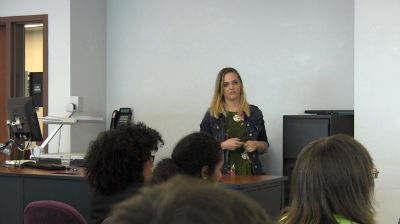
Taylor Waldon: Making Content Part of Company Culture
WordCamp Santa Clarita 2019Speaker: Taylor WaldonMay 30, 2020 — The need for content production goes deeper than having something to post on your blog, Facebook, or Twitter. It’s about strategizing with your entire team to make sure the content you produce supports your product or service and provides real value to your online audience.
In order to work with a team, you need a solid content process in place. Moreso, you need to create company culture that includes content creation. Learn from Taylor Waldon how to create content as a team and provide value to both your users and your search engine optimization strategy.

An  Invention
 WordPress.tv