
Language: English
-

Joshua Strebel: 5 Ways You May Be Sabotaging Your Business + 2 Proven Ways to Succeed
WordCamp Europe 2017Speaker: Joshua StrebelJuly 18, 2017 — Learning the hard lessons the hard way is never fun. This talk will be in the form of 5 short stories on how I self-sabotaged my own career, and my business endeavors and briefly touch on how I recovered, or didn’t in some cases. Will close with 2 revelations that anyone can and should apply in their own business.
Burning the candle at both ends (2 jobs or a side job/product)
Taking on debt to make payroll as an agency
Firing slow (bad culture fits kill morale)
Swimming against the current in the community (necessary at times, but mind your tone)
All hustle, no personal time. (nothing is worth family + relationships)
Iterate, Iterate, Iterate (perseverance)
Invest in your team at every opportunity (the golden ticket) -
Yvonne Conway-Williams : Cybersecurity – Russian Hackers, Privacy, and You
WordCamp Orange County 2017Speaker: Yvonne Conway-WilliamsJuly 17, 2017 — “Are we giving too much information away?
As we adopt use of technology into our daily routines, it’s easy to forget that our blogs and connected social media posts sometimes reach a wider audience than we mean them to. Updates intended for friends, family, and coworkers may seem innocuous enough, but often leak private information that hackers can use to invade our privacy and steal important data.
In this presentation I will discuss ways in which we can become more aware of our vulnerabilities online, and make recommendations on how to avoid some common pitfalls. -
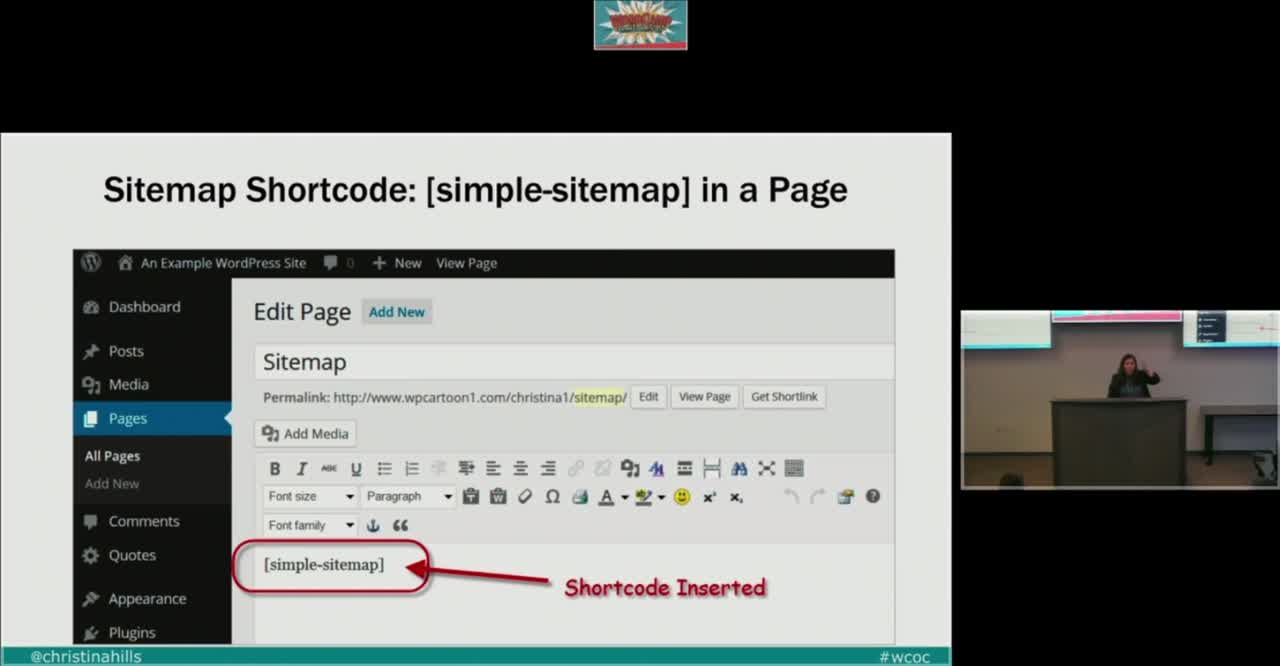
Christina Hills : A Beginners Guide to Free WordPress Plugins
WordCamp Orange County 2017Speaker: Christina HillsJuly 17, 2017 — One of the most confusing (and exciting) features of using WordPress is Plugins! But how do you know for sure which ones you absolutely need and which you should avoid at all costs?
In this session, Christina Hills will walk you though, step-by-step, the various types of plugins you might need as well as how to properly evaluate and install them. Discover which free plugins are essential and know when and if you should upgrade to the Pro version. You’ll also learn the exact steps to take when a plugin goes “bad” so your website is up and running in no time.
Attend this session and you’ll walk away fully understanding the Wonderful World of WordPress Plugins! -

Bigul Malayi: WordPress Localization and Translation
WordCamp Udaipur 2017Speaker: Bigul MalayiJuly 17, 2017 — Bigul hails from Kerala and started his web development journey as a PHP developer in 2005. He is working with WordPress since 2008.
The session is targeted towards users and developers seeking information and has queries related to WordPress translation. Working in the same niche, Bigul is exactly the right guy who can answer all the queries and can give the in-depth overview of the topic. -

Gaurav Pareek: Diversity And Inclusion In Open Source Communities – An Indian Perspective
WordCamp Udaipur 2017Speaker: Gaurav PareekJuly 17, 2017 — Gaurav works as a Happiness Engineer at Automattic. He is in the web industry for about 8 years, and have donned a number of hats during this period, including startup founder, developer, designer, business manager, front office, 3d architectural designer, in-house developer etc.
With this talk, he want to explain how he have perceived these issues during his involvement in communities over the years, and want to raise some questions about the current situation, and what can be done to improve (and what exactly do we call improvement in such a case). -

Amit Singh: Rapid Prototyping with WordPress
WordCamp Udaipur 2017Speaker: Amit SinghJuly 17, 2017 — Founder at WPoets Amit is working with WordPress since 2007. He has contributed his first WordPress plugin to WordPress.org repository in 2008 and never looked back since.
In this talk he focused on developers and he explained various tools that you can use to do prototyping of ideas without writing code, paving way for quicker development workflow. -

Victoria Park: The Importance of Providing Great Product Support
WordCamp Udaipur 2017Speaker: Victoria ParkJuly 17, 2017 — Victoria is a Happiness Engineer at Automattic, and she provides support for users on WordPress.com sites.She talked about The importance of providing support for your products.
This talk is intended to bring awareness to the fact that the work is not over once you ship a plugin/product. The value of a plugin/product is not just in the end result, it includes the support that you follow up with, and it’s the support that you provide that induces loyalty towards the user. -

Mridul Goswami: Contracts, Copyrights and Other Legal Aspects
WordCamp Udaipur 2017Speaker: Mridul GoswamiJuly 12, 2017 — Mridul Goswami is a practicing Lawyer with over 3 years of experience and a keen interest in technology. Along with this he has been a web developer for last 5 years. In this talk Mridul shares the importance of setting up correct contracts with clients and essentials for the terms and conditions of a web project.
-

Vajrasar Goswami: Why Everyone Wants You To Blog?
WordCamp Udaipur 2017Speaker: Vajrasar GoswamiJuly 12, 2017 — Vajrasar is a WordPress Developer and has a keen interest in blogging. He shares some tips on why blogging is important for developers, designers and everyone in general.
-

Zachary Miller and Sarah Feinstein: WordPress In The Wholesale Apparel Industry
WordCamp Udaipur 2017Speakers: Zachary Miller, Sarah FeinsteinJuly 12, 2017 — With this talk, we will get a glimpse of how one can use WordPress to not only solve the primary motive of a getting a website, but also on how to leverage the platform side of it.

An  Thingamajig
